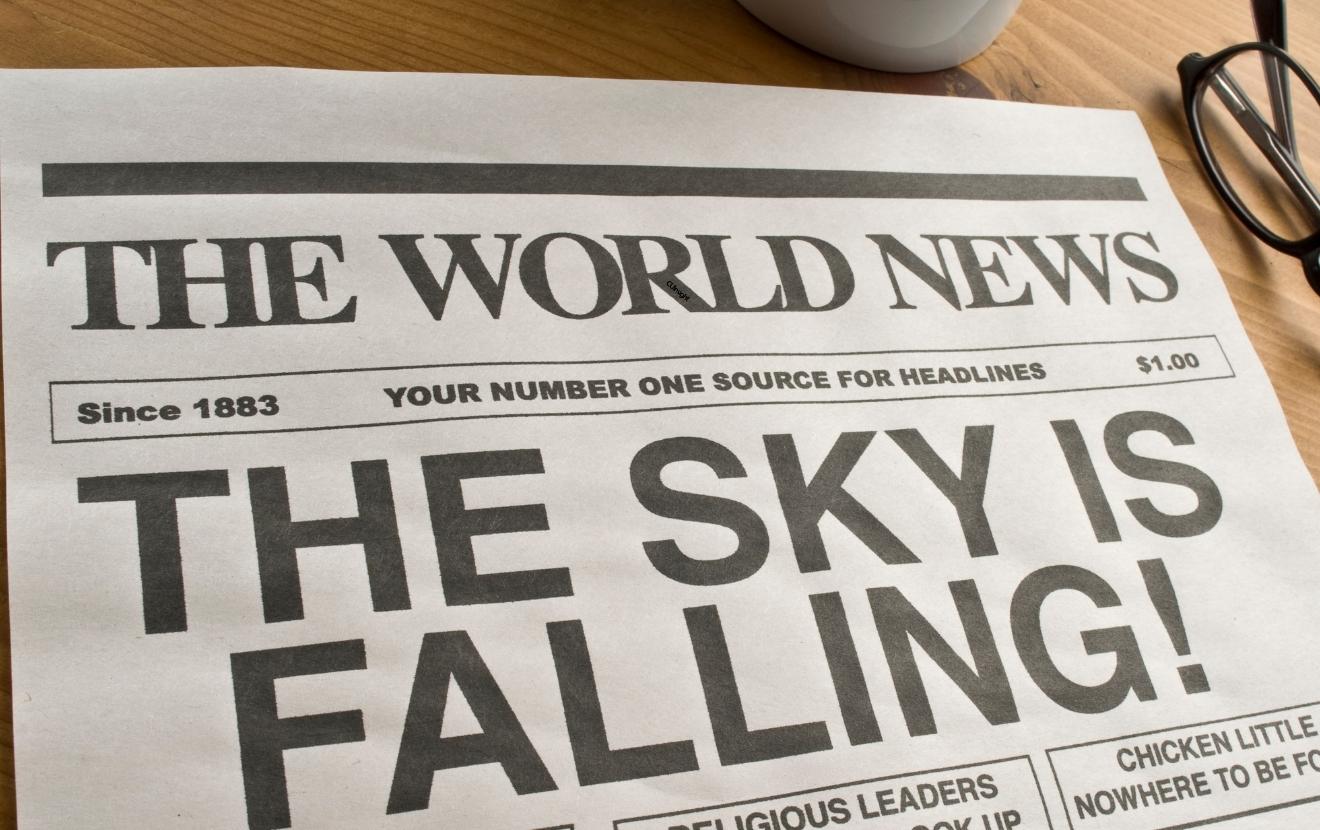
Your credit union enters the 2025 strategic planning season against a backdrop of heightened economic and geopolitical stress. The impact of tariff policies, we’re told, will be felt soon. Federal Reserve policy makers are clearly braced for bad news. Soft data—including some measures of consumer and business sentiment—reflect real concern. Against this backdrop, social media algorithms increase economic confusion and anxiety among a sharply divided electorate.
You may feel like the sky really is falling.
But is it?
Today, the answer is a resounding “no”. Economic fundamentals are solid.
Want proof?
Look no further than the so-called Misery Index—which is basically the combination of two really miserable things: the unemployment rate and the headline inflation rate. Today, if you were to add those two numbers together, you’d quickly discover that the result is a fairly low number: the May unemployment rate of 4.2% + the May CPI annual inflation rate of 2.3% = a May Misery Index of 6.5%.
For context, note that this reading is actually lower than 85% of the nearly 800 individual monthly Misery Index values since the beginning of 1960.
Which means the average consumer clearly is doing well from a broad economic perspective. And that’s important because consumers represent roughly two-thirds of U.S. economic activity overall.
Even so, planning will be very challenging this year. The unease mentioned above is real. And uncertainty and volatility mean that keeping your eye on the data is more important than ever.
Examining multiple scenarios and preparing for the consequences will be key. Flexibility and a willingness to pivot from strategic priorities to help members through difficult situations may be required. Opportunities are large where the needs are great.
Tracking changes—even subtle changes—in the economy’s vital signs could spell the difference between success and failure.
The trusty Schenk Recession Dashboard—shown below—is a good way to follow important trends in key variables. Each Dashboard indicator has been used by economists when evaluating the economy’s trajectory. All have decent—though not perfect—predictive track records. The list is not comprehensive. Amend it. Improve it. Make it your own.
The Dashboard’s hot-links lead you to graphic depictions of important trends, as well as the underlying source data for each metric. Each includes explanations of what the data is and why it’s important.
The Dashboard leads off with the Sahm Rule Recession Indicator—a historically reliable indicator that uses U.S. unemployment rate data to identify recessions in real-time (i.e., it is a “coincident indicator”). In simple terms, the Sahm Rule says that if the current average unemployment rate is at least a half-percentage point higher than averages seen over the past year then the economy is in recession.
At this writing the Sahm indicator value is 0.27 which suggests the U.S. is NOT currently in a recession.
Unlike the Saham Rule indicator, each of the others on the Dashboard are “leading” (not coincident) indicators.
They include measures of borrowing costs and credit availability, trends in production, hours worked, energy prices and the consumer mood. When your review of the data compels you to flip any of the signals on the list flip from “NO” to “YES” that suggests that the likelihood of recession is rising.
A good rule of thumb is that your overall level of comfort with the economy’s future trajectory should decline as the number of recession signals on the list increases. The next year will be challenging. My advice: Beware. And “Be Aware”.
Use this Dashboard (or create your own). Update and refer to it often. Your members will thank you.
Schenk's Recession Dashboard
As of 7/2/25. When connected to the internet click on YES/NO hotlinks to see current readings. Recession signal = "YES"
| Saham Rule recession indicator? | NO |
| Sustained inverted yield curve (10yr-2yr)? | NO |
| Broadly declining money supply (M2)? | NO |
| Leading Econ. Indicators 6mo Growth/Diffusion Index <50 | Warning |
| Hours worked: 1yr % change negative? | NO |
| 3-mo 20+ point decline in Consumer Confidence (Conf Bd)? | NO |
| Net % Bank Sr. Lenders tightening C&I underwriting positive? | YES |
| Baa Corporate-10yr Treasury yield spreads widening? | NO |
| Big increases in energy prices? | NO |
| YOY decline in Real Industrial Production? | NO |
Note: The “YES” and “NO” indicators are not updated automatically – ctrl-click the hotlink and manually change if the indicator has reversed.