The fire is real
What happens when your business expenses double overnight?
That is not a hypothetical. For tens of thousands of small business owners across the country, it has been the reality of the past year. Tariffs on overseas manufacturing partners spiked without warning. Supply costs that had been stable for years suddenly became impossible to absorb. And most of those businesses had nowhere to turn.
I watched this happen up close. My friend Cassie Abel, founder and CEO of Wild Rye, a premium women's outdoor apparel brand out of Ketchum, Idaho, saw her tariffs on Chinese manufacturing partners skyrocket to nearly 200 percent. That is north of $600,000 in costs she never planned for, landing on top of a new ski outerwear line she was launching, on top of a business she had spent years building from the ground up.
I have known Cassie for nearly twenty years. She was at my wedding. I have worn her gear mountain biking, skiing, and rafting all over this state, and it is built exactly the way she runs her company: to hold up when conditions get hard.
She didn't fold. Instead, she helped bring the fight all the way to the United States Supreme Court. Her brief helped illustrate the real-world impact of the tariffs on small businesses, and in February 2026, the court issued a 6-3 ruling rebuking those tariffs as illegal. A rare instance of the high court striking down the president's agenda, on behalf of hundreds of thousands of businesses across the country.
"Our story was on behalf of hundreds of thousands of businesses in the U.S. and their consumers that are being affected."—Cassie Abel, Wild Rye
When asked how she was feeling after the ruling, she said: "I'm mildly optimistic."
For Cassie, that's a victory lap. But here is what stays with me: she shouldn't have had to go to the Supreme Court to survive.
Who was in her corner before it got that far?
That question is directed squarely at credit unions.
I ask it personally. Cassie is my friend. My business partner Cara's parents were small business owners until the pandemic forced them to close. The people I talk to every single day, the ones we built Goodbuy to serve, are small business owners. They are not a market segment or a growth opportunity. They are the backbone of this country, and they are the reason we show up to work.
Not as a criticism. As a challenge. Credit unions were founded to be exactly the kind of institution that shows up for people when the system isn't working in their favor. Small businesses are those people right now. And the gap between what credit unions stand for and where they are actually showing up has never been more visible.
This isn't just one founder's story
Cassie had the platform and the fight to take her struggle to the highest court in the land. Most small business owners just close the door.
Tariff whiplash. Tightening credit markets. Consumer confidence that has been shaky all year. Supply chains that still haven't fully stabilized. The cumulative pressure on small businesses right now is staggering, and it is not making the same headlines as a bank collapse or a stock selloff, even though the human cost is just as real.
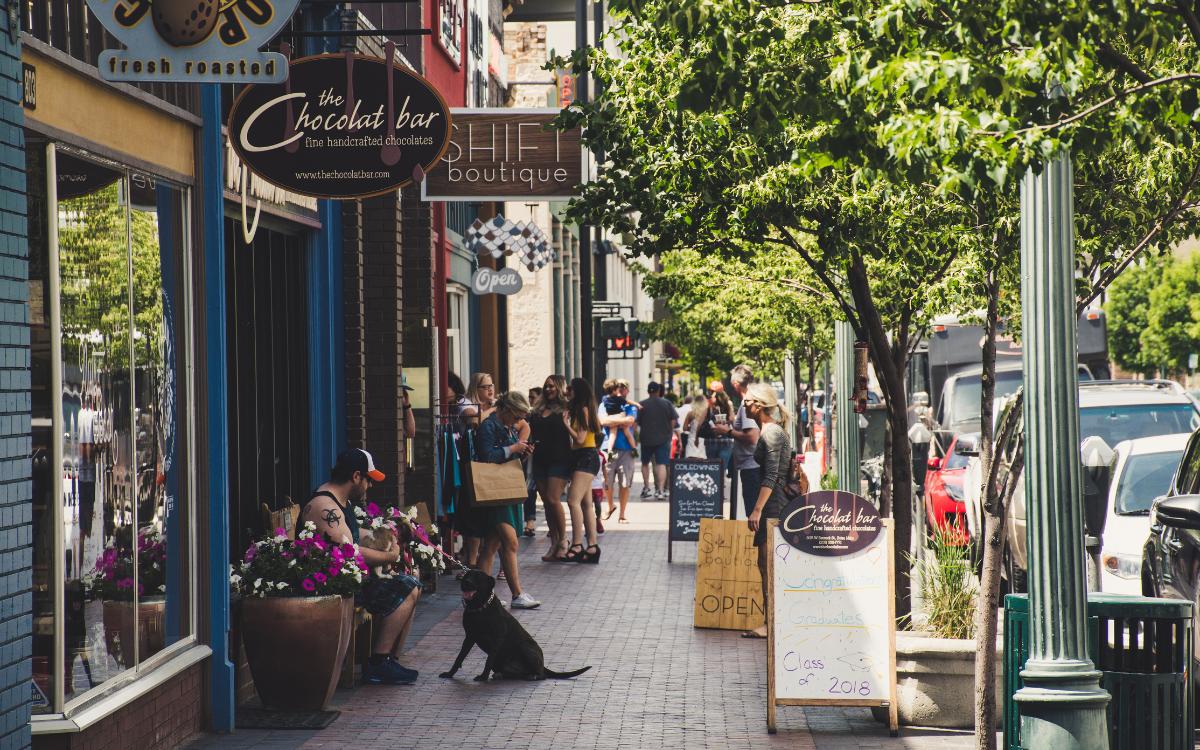
Small businesses employ nearly half the U.S. workforce. They are the economic fabric of our communities. The coffee shop that knows your name. The boutique that sponsors the little league team. The manufacturer keeping a town employed. When they struggle, everyone feels it. When they close, communities don't just lose a business. They lose an anchor.
The credit union paradox
Credit unions were founded to serve people that banks overlook. Small businesses are exactly those people.
The credit union model was built on a radical idea: that financial institutions should serve their communities, not just their shareholders. That people with less power, less wealth, and less institutional backing deserve access to fair financial services. That the mission matters, not just the margin.
And yet: 96% of small businesses don't bank with a credit union. In a moment when small businesses desperately need a financial ally, someone who knows them, believes in them, will pick up the phone, most of them don't even think to call a credit union. That's not just a missed growth opportunity. In this moment, it is a mission failure.
If credit unions exist to serve communities, and small businesses are the economic engine of those communities, then the math is uncomfortable. The institutions most aligned with small business values are the ones most absent from small business banking.
What showing up actually looks like
This isn't a call for a new loan product. It's a call for a new posture.
Showing up for small businesses right now doesn't start with a product launch or a rate sheet. It starts with visibility. Being woven into the economic fabric of the community in a way that members and businesses can actually see and feel.
It looks like being present where small businesses are, in the local ecosystem, not just the local branch. It looks like creating the connective tissue between your members and the businesses they care about. It looks like understanding that community banking is not a tagline. It is infrastructure. And it is not just physical. These relationships can and should live in the digital space too.
Credit unions that understand community commerce, the idea that a financial institution can actively connect its members to local businesses, are already building something different. Not a perk. Not a discount program. A genuine signal to their members: we are not just here for your money. We are here for your life.
The fire won't wait
Cassie Abel is still standing. Wild Rye is still building. She will keep going, because that is what founders do. They absorb the hits and figure out the next move. But she said it herself: her story was on behalf of hundreds of thousands of businesses. Most of them don't have the resources, the legal team, or the national platform she had.
Most of them just need an institution that shows up.
Credit unions talk a lot about community. This is what community looks like in practice. Not in a mission statement, not on a branch mural, but in the moment when Main Street is burning and someone decides to show up with water.
The fire is real. The question for every credit union reading this isn't whether they care about small businesses. It is whether they are building the infrastructure to act on that care, before the next crisis hits and another founder has to fight her way to the Supreme Court alone.