For decades, the financial industry operated on a straightforward assumption: branches generated revenue, while digital banking helped cut costs.
The branch was where loans were signed, checking accounts opened and relationships deepened. Digital banking, by contrast, was often viewed as a convenience layer—useful for balance checks, bill payments, and reducing teller traffic—but ultimately an operational expense.
That framework is beginning to erode.
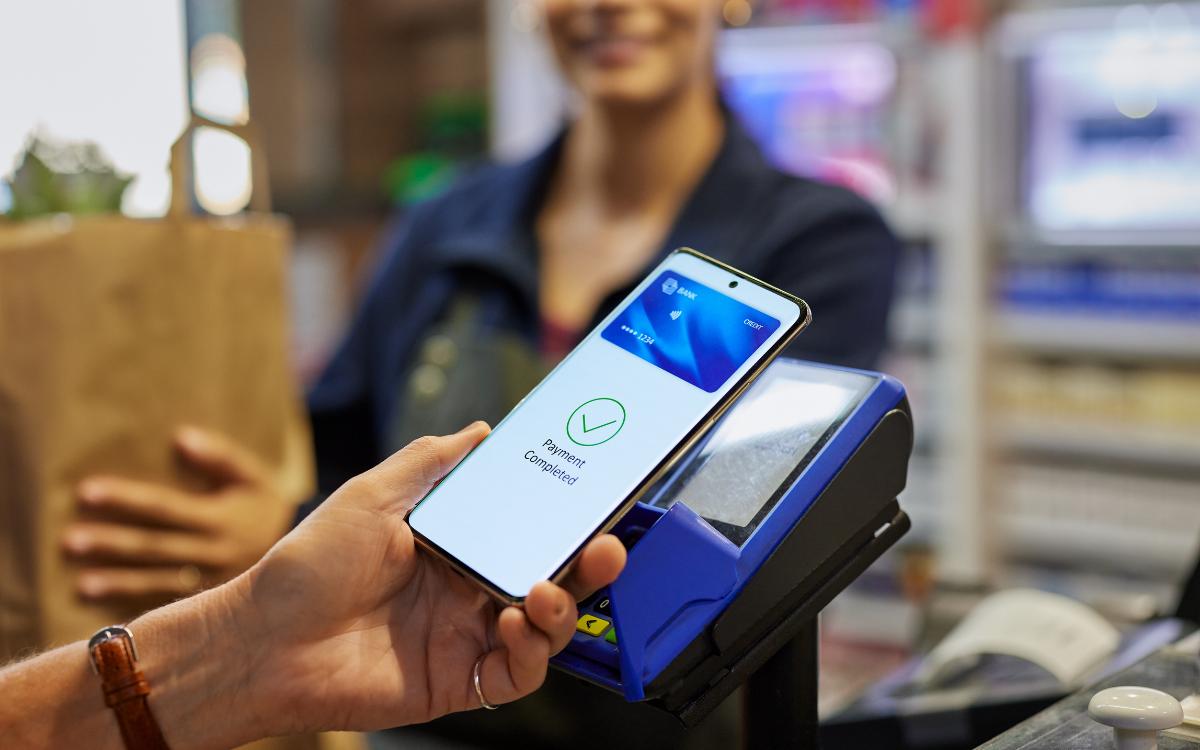
Across the credit union landscape, executives are increasingly confronting a different reality: many customers now begin—and often maintain—their financial relationships through phones and laptops rather than physical branches. As mobile usage reshapes how consumers shop for loans, open accounts, and manage their money, digital platforms are being recast from back-office utilities into revenue-generating infrastructure.
“That shift made it clear that digital banking was influencing growth, retention, and product adoption, not just servicing transactions,” Tracy Ingram, chief technology officer of Achieva Credit Union, said in an interview with Tyfone.
Based in Dunedin, FL, Achieva has more than 218,000 members and $3.2 billion in assets. The credit union earned $6.8 million during the first quarter of 2026, up from $4.9 million a year earlier.
Ingram said the shift became visible through member behavior. Digital loan applications increased. Mobile engagement deepened. Members who actively used digital channels often adopted more products and remained with the institution longer.
For financial institutions, the challenge increasingly lies in understanding how revenue is actually generated in a world where customer interactions rarely occur in a single place.
A borrower might first encounter a loan offer through a mobile app notification, research rates online, use a payment calculator on a website, then ultimately walk into a branch to finalize paperwork. Under traditional measurement systems, the branch would receive credit for the sale even though much of the decision-making process happened digitally.
That attribution gap has become a growing focus inside the industry.
“At our credit union, we increasingly view attribution through the lens of the overall member journey rather than treating channels as isolated touchpoints,” Ingram said.
The shift reflects broader changes in consumer behavior. Industry data often now shows that mobile banking has become the preferred method of banking for a majority of consumers, while branch-only interactions now represent a small minority.
At the same time, competition has widened beyond traditional banks and credit unions. Consumers increasingly use fintech apps and nontraditional digital financial providers for payments, lending and budgeting tools, placing pressure on smaller institutions to modernize.
That pressure is especially acute for community financial institutions, which historically relied on branch proximity and local relationships as competitive advantages.
For years, many credit unions expanded physical branch networks under the belief that those locations were the primary drivers of growth. Digital investments were often justified through operational savings rather than revenue potential.
Now, institutions are trying to balance both.
“We believe in the integrated model,” Ingram said, describing a strategy in which members move fluidly between digital and physical channels depending on their needs.
Routine transactions that once generated branch traffic—deposits, transfers, balance inquiries and loan payments—have steadily migrated online. But branches, she said, still serve a role in more complex financial discussions and advisory conversations.
“Today, branches are increasingly focused on higher-value interactions such as financial guidance, complex problem solving, lending conversations, and relationship building,” she said.
That evolution has created new strategic questions for credit unions already facing mounting technology costs.
Many institutions continue operating on decades-old core banking systems that were not designed for modern mobile platforms or real-time digital experiences. Yet replacing those systems outright can be expensive and disruptive.
Ingram said the larger obstacle is no longer always the technology itself.
“In many cases, the technology is no longer the primary barrier,” she said. “What has become the greater challenge is process reinvention.”
Many operational workflows inside financial institutions were built around the limitations of older systems, she said, and over time became embedded in organizational culture. Changing those habits can prove more difficult than implementing new software.
The tension underscores a broader transition underway across financial services. Digital transformation is no longer simply about offering online banking or mobile deposits. Increasingly, institutions are trying to determine whether digital engagement can directly drive revenue growth, deepen relationships, and improve profitability.
That shift also carries risks.
Consumers expect personalized experiences, faster service, and seamless digital tools, but they are also increasingly sensitive to privacy concerns and aggressive marketing practices. Ingram said Achieva has tried to approach personalization cautiously, using data to improve member experiences rather than overwhelm users with product offers.
“For us, personalization is most effective when it is relevant, timely, and genuinely beneficial to the member,” she said.
The industry’s underlying economics are changing as well. Digital platforms allow institutions to expand reach without building expensive branch networks, potentially giving midsize credit unions greater ability to compete across broader geographic areas.
But the transition remains uneven.
Many community institutions still operate with legacy infrastructure while trying to meet consumer expectations shaped by national banks and technology companies. Others are attempting to redefine the role of branches entirely.
What increasingly seems clear is that the old distinction between “branch revenue” and “digital expense” no longer fits the way consumers actually bank.
For institutions trying to adapt, the question is no longer whether digital matters. It is whether they can evolve quickly enough to make it central to how they grow.
Portland, Oregon-based Tyfone is a leading provider of consumer and commercial digital banking services for community financial institutions. At Tyfone, we believe that as credit unions of all sizes continue to look for new revenue opportunities, adopting cutting-edge digital banking technologies becomes crucial.