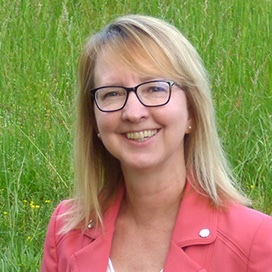
The meeting was going well. My vice president was smiling across the table from me. My boss, the assistant VP, was on my left and the CEO was at the head of the table to my right. We were discussing the latest advertising campaign. I can’t remember what it was promoting exactly, but I do remember it being something different than a typical campaign for loans or deposits.
My team and I had worked with the analytics group to create this new approach, the data was solid, the creative work was compelling and on brand, now we just needed approvals.
I’d been quiet for most of the meeting, knowing my bosses would carry the conversation, but then I was caught off guard. The CEO leaned over to me and asked:
“So Jackie, tell me what YOU think.”
Wait, me? Little ol’ me? The CEO is asking the opinion of someone three levels below him? What was happening? The recently-retired CEO wouldn’t even look in my direction in these meetings and now this CEO was actually going way beyond that and asking my opinion? I could feel my energy shift. I went from head down, eyes on the comps and my mind drifting to what was for lunch, to shoulders back, head up and eyes wide open. Yes, I was nervous about voicing my thoughts, but that was overtaken by the pull I felt toward him and the conversation. I was no longer a bystander, there to hold the comps and point to the copy. I was now a part of the decision. He took the time—he made the time—to lean in and hear me.
It would’ve been so easy for him to grace our meeting, make a decision and move on to the next plate he had to keep spinning. Credit union executives have days full of meetings, decisions to be made, fires to put out, member issues to address, community obligations to keep. They wake wanting to create impact and innovation then by lunch they’re swamped with the minutiae of meetings and memos. They’re expected to have all the answers, make the big calls, and do it with a polish that’s almost blinding. How—when—can they possibly create bold moves toward their vision? They wake up wanting to lead. By noon they're just barely keeping up.
But this CEO let me see under the hood. He invited me into the process. He gained a huge fan that day, one that carried the banner for his ideas and vision for years. Turns out his approach is gaining traction throughout leadership circles.
It’s what’s happening at one of the world’s largest companies. Microsoft’s impressive turnaround is often credited with their CEO’s ability to create cohesion through curiosity—a far cry from the traditional command-and-control methods many leaders still feel they need to use.
And research into organizational development is also suggesting this approach can be applied to other large organizations as well. Amy Edmondson's research on psychological safety—brought to life in Google's Project Aristotle—found that the highest performing teams weren't the smartest. They were the safest.
Building trust—aka psychological safety—within teams and organizations can start as simply as what my CEO modeled: asking questions. Slowing down just enough to be curious, to invite other opinions, to hear what matters to others.
And this trust is a key element for modern leadership, for times like this that are uncertain. Staffers are craving safety. A sense of shared experience. Give them that space. Lean into the staffer who’s a little nervous, the one who might be bored or bitter, and ask them: so, what do you think?
For those craving an empowered Movement, a credit union with engaged employees who truly serve their members, they’d do well to listen in on a recent CU CEO call: I’m tired of seeing leaders push. I want to bring people with me.
That's not a management philosophy. That's a human being deciding what kind of leader he wants to be.
The movement has always been built on the belief that people matter more than transactions. That members are more than accounts. If that's true, and most of you reading this believe it is, then the leaders who will carry it forward aren't the ones with the sharpest strategy or the most polished presence.
They're the ones brave enough to lean over and ask.