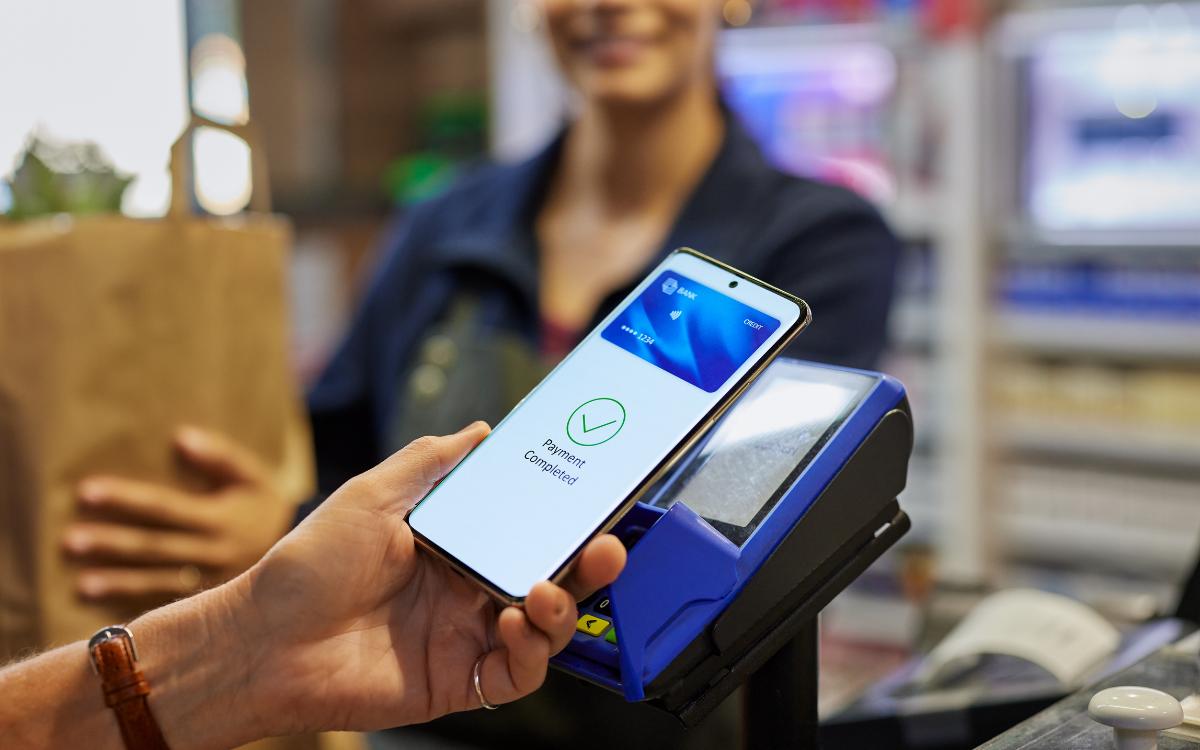

Credit unions aren’t losing members. They’re losing moments.
What was once a single, primary financial relationship is now distributed across cards, apps and platforms. Members still value their credit union—but they’re increasingly choosing other providers when those providers offer faster, simpler and more immediate experiences.
The idea of having one financial institution you do everything with is long gone.
That doesn’t diminish the credit union model. But it does redefine what it takes to stay competitive.
In today’s environment, every interaction is a decision point—and the institutions that win are the ones that deliver the right experience in the moment.
Experience has become the new battleground
Member expectations have shifted from “good service” to instant access and seamless usability.
Whether it’s opening an account, issuing a card or making a payment, the expectation is increasingly real time. That expectation isn’t being set by traditional financial institutions—it’s being set by the fastest experience a member has anywhere.
As a result, even loyal members are spreading their activity across providers.
They may keep their primary account with a credit union—but use a fintech for payments, another provider for credit, and a digital wallet for daily transactions.
This fragmentation creates a new kind of risk: Not losing the member relationship entirely—but losing the moments that drive engagement and growth.
Why platform architecture matters more than features
Many credit unions are responding by adding new features or partners. But the challenge often isn’t what they offer—it’s how those capabilities are delivered.
Legacy infrastructure and fragmented systems can limit flexibility, slow time to market and create inconsistent member experiences. In fact, more than half of financial institutions running legacy systems struggle to scale effectively.
This is where platform strategy becomes critical.
Rather than layering new solutions on top of old systems, more institutions are shifting toward unified issuing and payments platforms that bring products, data, and experiences together.
From fragmentation to a unified, customer-centric model
A unified platform changes how credit unions operate.
Instead of managing multiple vendors and disconnected systems, institutions can bring credit, debit, prepaid and money movement into a single environment—supported by a shared data model and real-time processing.
This approach enables what many credit unions are now prioritizing:
- A 360-degree view of the member relationship
- Consistent experiences across channels
- Real-time insights that inform engagement
- Faster product configuration and deployment
Platforms like i2c’s are built around this model, providing a single system that connects products, transactions and data across the entire lifecycle.
With that foundation, credit unions can move from reacting to member behavior to anticipating it—identifying when engagement shifts and responding in real time.
Winning the first transaction—and everything after
Speed plays a critical role in engagement.
One of the most important moments is the first transaction. If a member doesn’t use a product immediately, the likelihood of long-term adoption drops significantly.
That’s why instant issuance and real-time provisioning are becoming essential.
With next-gen issuing platforms, credit unions can approve, issue and enable usage within minutes—eliminating the traditional delay between approval and activation.
From the member’s perspective, the expectation is simple: They applied for a product—and they want to use it now.
Closing that gap is one of the fastest ways to improve activation, increase usage and move toward top-of-wallet positioning.
Regaining control of the member experience
Another key shift is how credit unions think about control.
Traditional issuing models often rely on external partners, which can limit how products are structured and how experiences are delivered.
In those environments, institutions often give up control over critical elements like user experience, product configuration and even underwriting approaches.
Next-gen platforms are changing that dynamic.
By enabling configurable, in-platform controls, credit unions can:
- Adjust product features without vendor delays
- Tailor experiences to specific member segments
- Align program design with their strategic goals
This flexibility allows institutions to move faster—and differentiate more effectively.
Scaling capabilities, not complexity
One of the biggest barriers to modernization has historically been resources.
Many credit unions don’t have the scale to build and maintain complex technology environments internally.
That’s why platform models that combine infrastructure with managed services are gaining traction.
With this approach, institutions can access capabilities such as:
…without needing to build those capabilities from scratch.
This allows credit unions to scale more efficiently—focusing internal resources on strategy and member engagement rather than infrastructure.
Turning better experiences into measurable growth
The impact of these changes goes beyond operational efficiency.
When credit unions deliver faster, more consistent and more relevant experiences, the results show up in performance:
- Higher activation rates
- Increased transaction volume
- Stronger engagement across products
- Improved retention and share of wallet
Programs that achieve strong top-of-wallet positioning can drive 7–10% higher ongoing spend—demonstrating how experience directly translates into growth.
Why more credit unions are rethinking their approach
Credit unions don’t need to outbuild the largest banks. But they do need to stay competitive where it matters.
That means ensuring their products and experiences meet baseline expectations—so their core advantage, the member relationship, can continue to differentiate.
Platforms like i2c are increasingly part of that strategy—helping credit unions modernize infrastructure, simplify operations and deliver the kind of real-time, customer-centric experiences members now expect.
When that experience is seamless and intuitive, it reinforces the trust and connection credit unions are built on—turning everyday interactions into stronger, longer-lasting relationships.
One click is all it takes
Members today are one click away from trying something new. That’s the challenge.
But it’s also the opportunity.
Credit unions that align their platforms, products and experiences around the member can turn that one click into deeper engagement—not fragmentation.
Putting it into action
For credit unions evaluating their next move, the opportunity isn’t just to modernize technology—it’s to rethink how experience is delivered across the entire member lifecycle.
That often starts with a closer look at whether current systems are enabling—or limiting—speed, flexibility and control.
More institutions are using that evaluation to move toward unified, real-time platforms that bring products, data and engagement together—reducing complexity while improving how they compete in the moments that matter.
Partners like i2c are helping credit unions make that shift—enabling them to simplify their stack, gain a complete view of the member and deliver faster, more relevant experiences without adding operational burden.
Where leading credit unions are going next
As expectations continue to evolve, the gap between institutions that can deliver in real time—and those that can’t—will only widen.
The credit unions pulling ahead are the ones that are:
- Replacing fragmented systems with unified platforms
- Prioritizing real-time engagement across every interaction
- Taking greater control over how products are delivered and experienced
Because in a market defined by choice, speed, and relevance, the ability to act in the moment is what determines who stays top of wallet—and top of mind.
See what’s possible with i2c’s unified platform
For credit unions looking to accelerate that transition, exploring platforms like i2c can provide a clearer view of what next-gen issuing and payments infrastructure should deliver—across performance, flexibility, and member experience.
👉 Learn more about how i2c supports credit unions at https://www.i2cinc.com.