Irvine, CA (March 12, 2026) |
Cotality, a leading global property information, analytics, and data-enabled solutions provider, today released the Homeowner Equity Report(HER) for the fourth quarter of 2025. Borrower equity continues to decrease nationwide, but there are bright spots where equity is still growing.
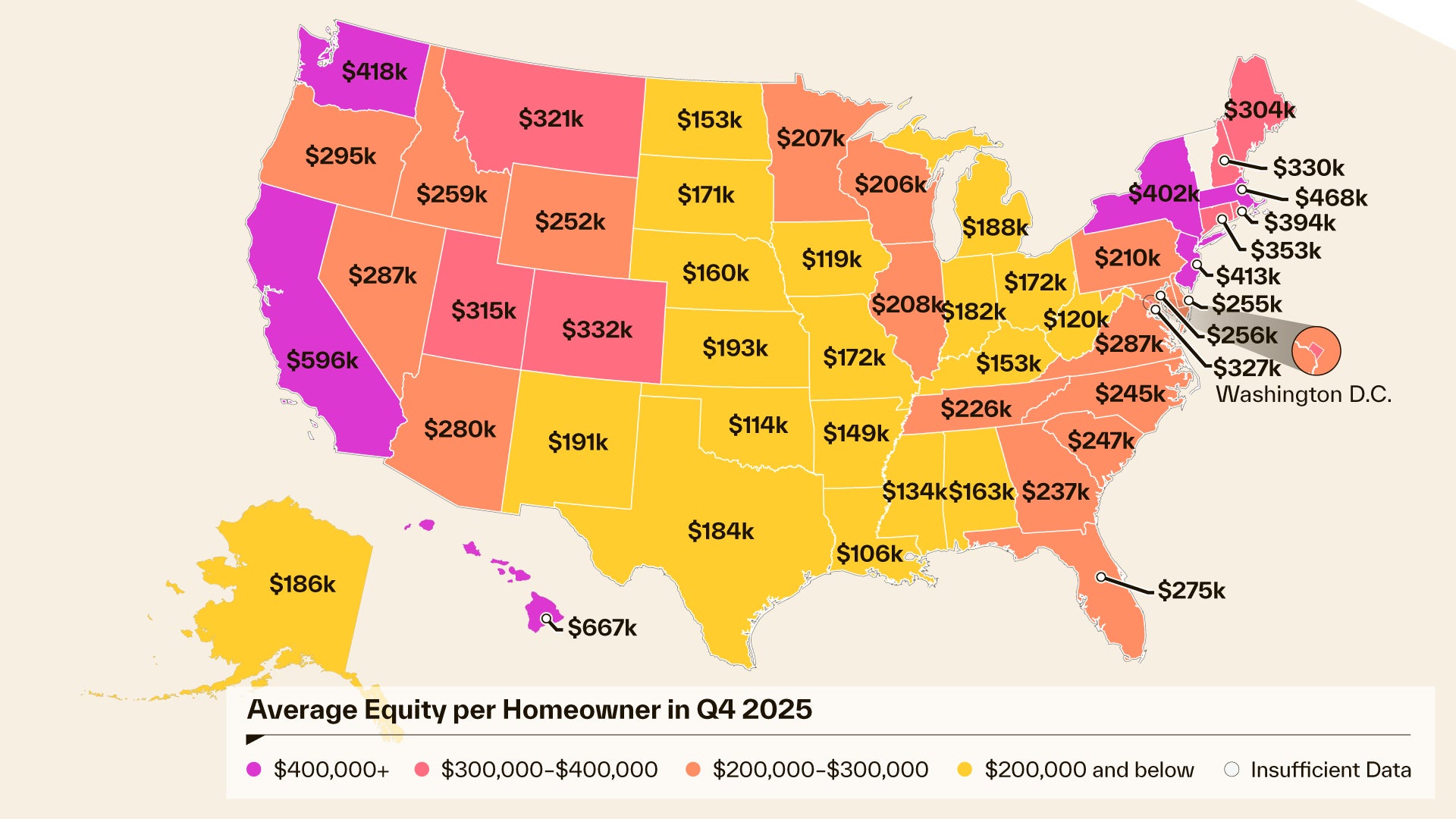
Borrower equity declined by $78.8 billion or 0.5% year over year in Q4 2025. That’s an average equity decrease of about $8,500 per borrower between Q42024 and Q4 2025, less than the $13,300 in equity lost in the previous quarter. The average borrower now has about $295,000 in accumulated home equity.
Negative equity increased by 15% to 1.1 million homes or 2% of all mortgaged properties year-over-year. The total number of mortgaged residential properties with negative equity increased by 3.6% to 1.2 million homes or 2.2% of all mortgaged properties quarter over quarter.
“As home price growth has slowed, homeowner equity has largely leveled off, but it remains historically high. Existing mortgage borrowers still control nearly $17 trillion in total equity, with roughly $11 trillion that could be tapped, and those figures have held remarkably steady over the past year. And while borrowers have been relatively timid in tapping the equity, declining borrowing rates could make tapping home equity relatively more affordable in the future,” said Cotality Chief Economist Dr. Selma Hepp.
Nevertheless, as housing markets remain divided, so do home equity gains. Falling home prices in some markets mean that some recent buyers are now finding themselves in negative equity.
“Looking ahead, muted home price appreciation could limit additional equity gains, and any deterioration in the labor market could pressure household balance sheets, particularly for more recent buyers with thinner equity cushions,” continued Hepp.
Compared to the third quarter, there has been a 3.6% increase in the number of mortgaged residential properties sitting in negative equity. Based on Cotality data, negative equity peaked at 26% of mortgaged residential properties in Q42009.
Current data shows that 185,000 properties would regain equity if home prices rose 5%, but 372,000 would fall into negative equity if prices fell by 5%. The Cotality Home Price Index currently forecasts prices will increase by 4.46% by December 2026.
The combined national value of negative equity was approximately $366 billion at the end of Q4 2025, up $3.3 billion, or 1%, from the previous quarter. It was up approximately $24.2 billion year over year, or 7%, from $342 billion inQ4 2024.
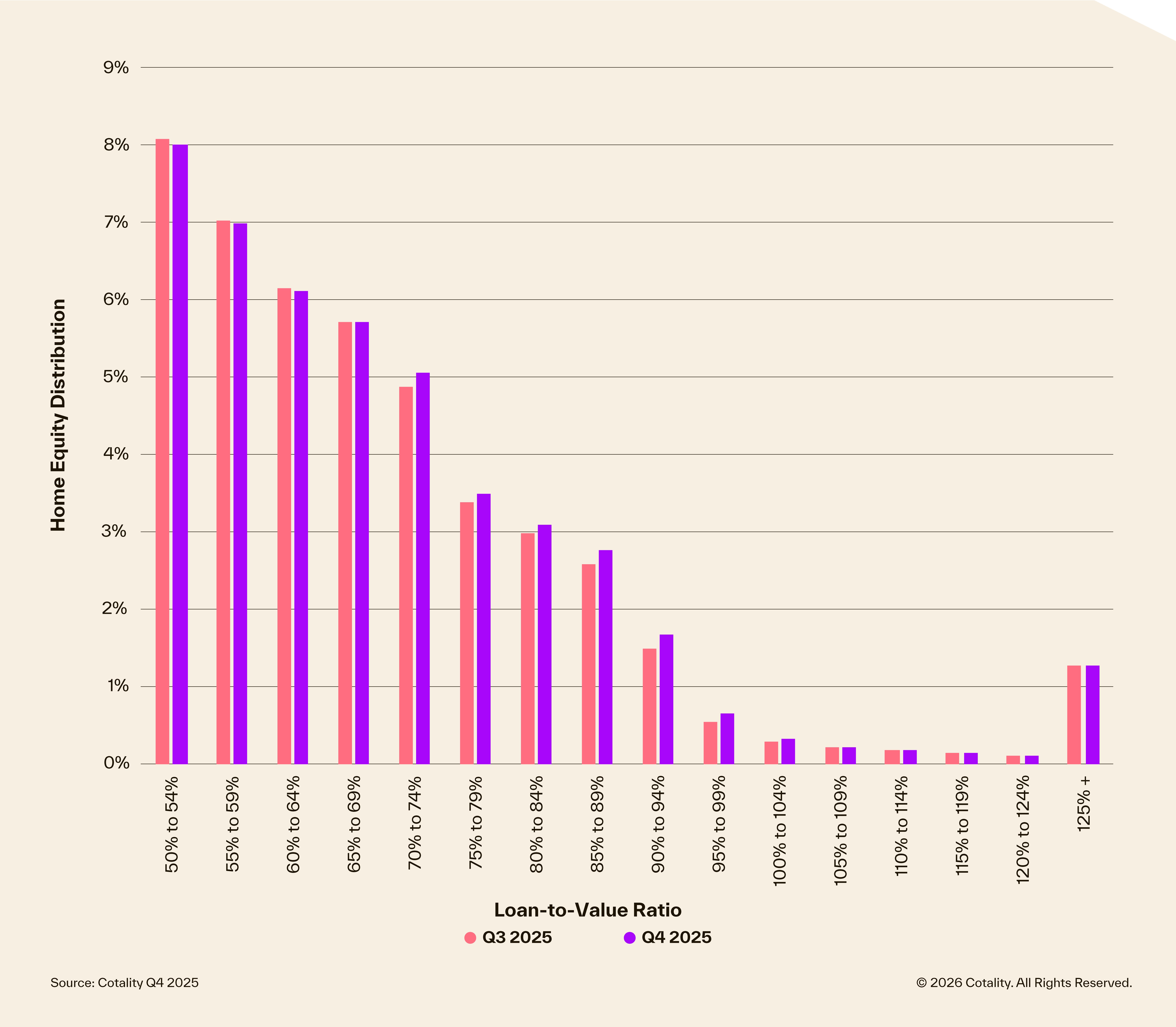
Loan-to-value (LTV) ratios continued to move higher. There has been a particular increase in the share of homeowners with 85% to 94% LTVs. The average LTV went from 44.8% to45.4%.
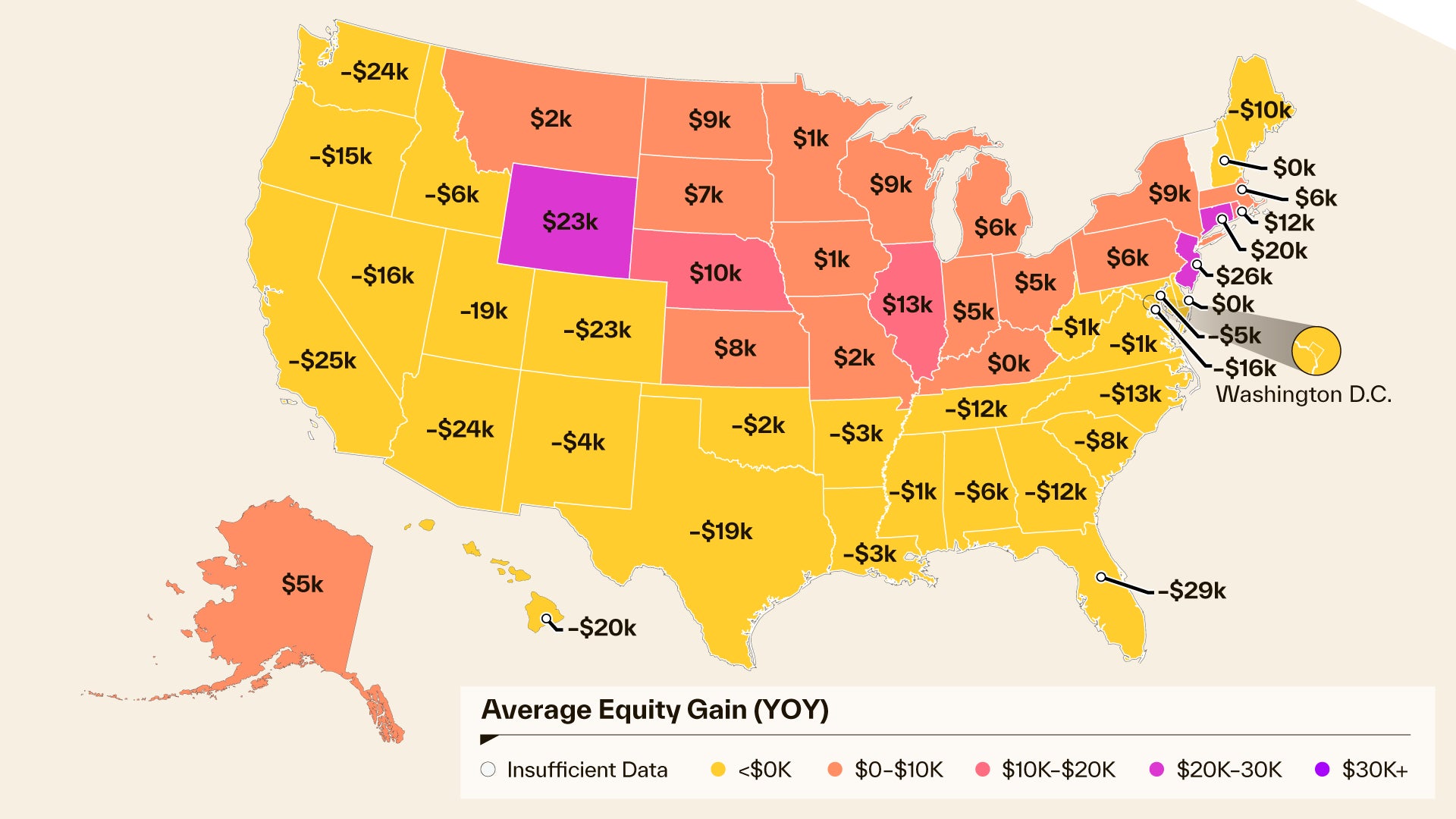
Home equity growth continues to be the strongest in the Northeast, but several other states also saw strong growth. New Jersey ($26.1K), Wyoming ($23.1K), Connecticut ($20.3K), Illinois ($13.3K), and Rhode Island ($12.1K) saw the strongest growth, but it was weaker than in the previous quarter in all locations. 17 other states saw equity gains, while 28 states posted equity losses. The top three states with the largest declines in equity were Florida ($-29.4K), California ($-24.7K), and Arizona ($-23.9K).
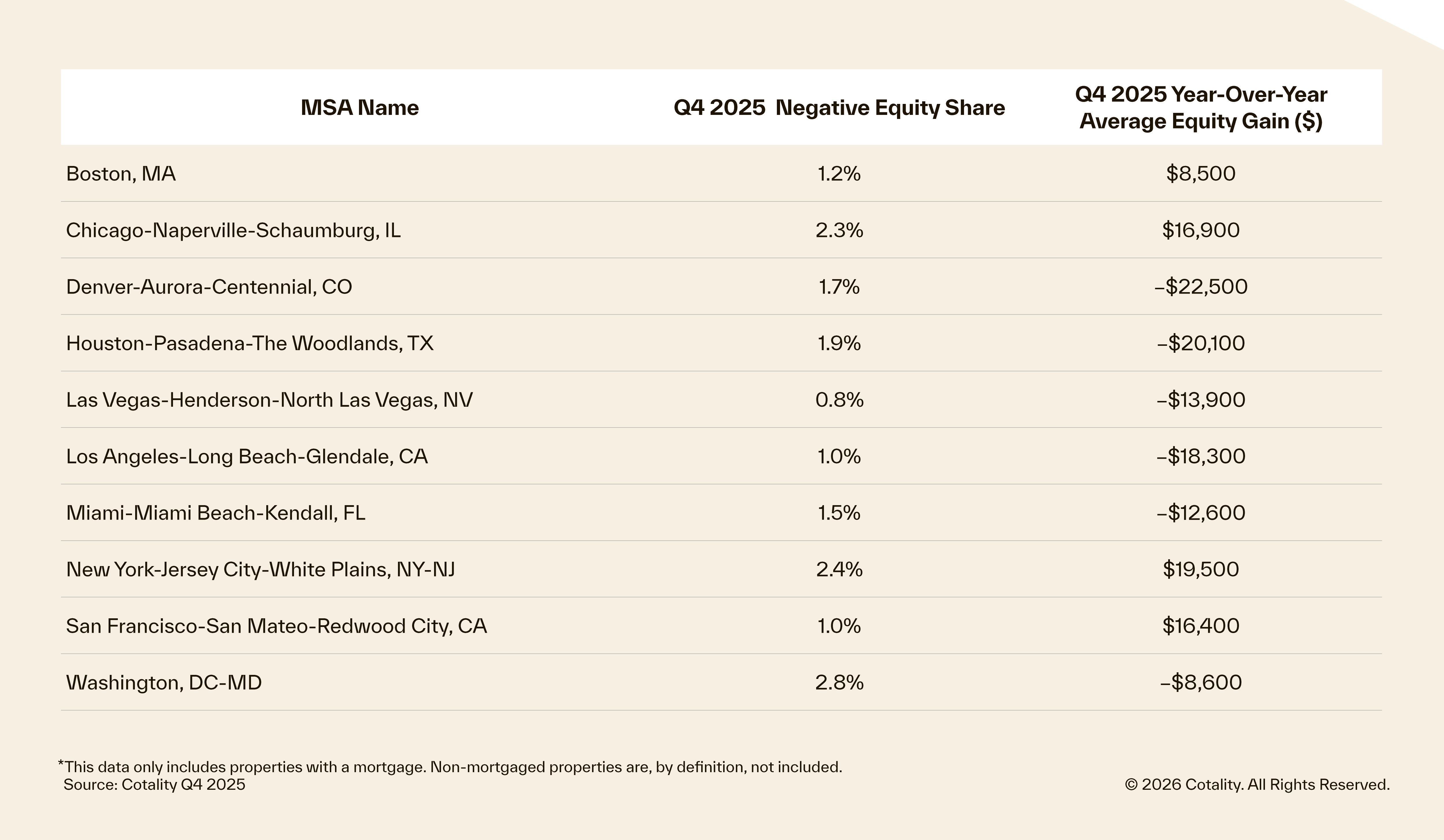
Cotality provides homeowner equity data at the metropolitan level. In Table 1, 10 of the largest cities, by housing stock, are depicted. While negative equity has increased nationally, New York City, Chicago, and San Francisco are the least affected. Markets that have seen large increases in negative equity shares include Denver, CO; Houston, TX; Los Angeles; and Las Vegas, NV.
The next Cotality Homeowner Equity Report will be released June 11, 2026, featuring data for Q1 2026. For ongoing housing trends and data, visit the Cotality Insights Blog: www.cotality.com/insights.