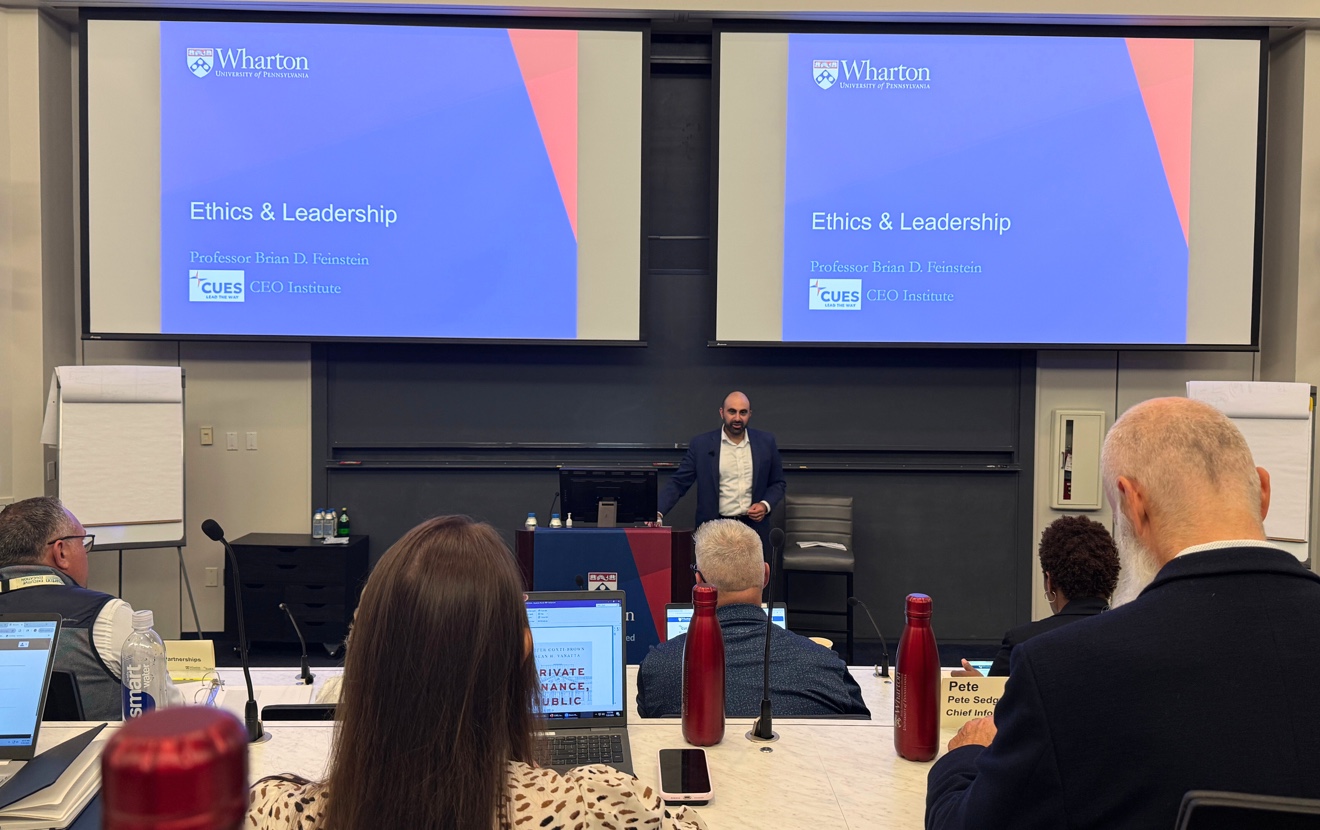
On day two of the CUES CEO Institute at Wharton, we spent time where leaders often don’t: the gray space between what’s legal and what’s right.
In a session on ethics and leadership with the Professor Brian D. Feinstein, we looked at everything from executive compensation to mergers, marketing practices, and political tension in the workplace. It was a reminder that leadership decisions aren’t just about compliance or performance. They’re about alignment.
One takeaway stuck with me:
“Just because it’s allowed doesn’t mean it’s aligned.”
It’s easy to justify decisions with legality.
“This contract is industry standard.”
“This merger improves efficiency.”
“This product meets disclosure requirements.”
But in credit unions, that’s not enough. Our work is built on trust, member value, and a mission that goes deeper than margins.
We were challenged to ask harder questions:
- Who benefits from this decision?
- Is this aligned with the values we say we live by?
- What would our members say if they saw how this decision was made?
In a world where so much is performative, ethics is one place that can’t be.
Ethical leadership means we think beyond the rulebook. We look at our compensation structures, our marketing, even our cultural fit during mergers, and ask: does this reflect who we say we are?
Sometimes that means walking away from a “good” deal.
Sometimes it means speaking up when it would be easier to stay quiet.
And sometimes it means slowing down just long enough to gut-check what growth really means.
Leadership is not just about making bold moves. It’s about making the right ones. Even when no one’s watching.
Because trust isn’t built by doing what’s allowed.
It’s built by doing what’s aligned.