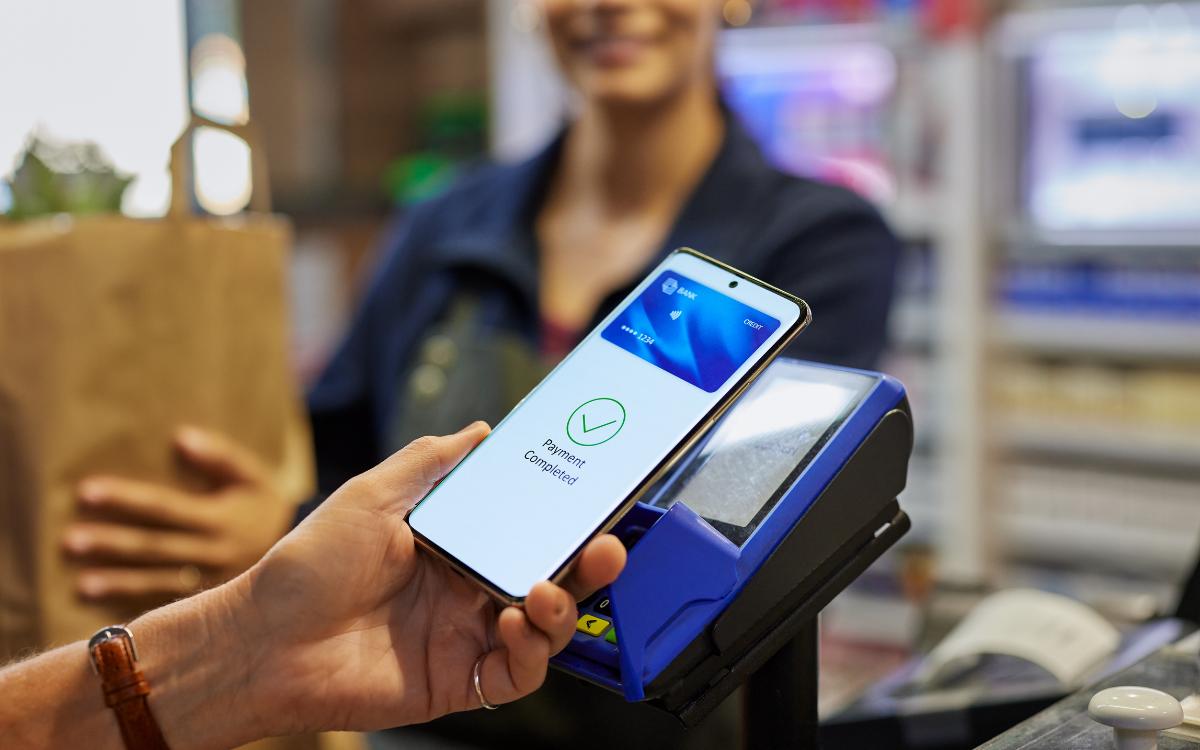
As we moved through 2025, it became clear that the payments industry crossed a structural threshold. Real-time payments became mainstream. ISO 20022 moved from roadmap item to operational requirement. Artificial intelligence shifted from experimentation to embedded capability.
What changed was not just speed. What changed was expectation.
Members now expect money to move with the same immediacy and reliability as digital information. Businesses expect instant access to funds to manage liquidity in real time. And leadership teams are being asked to deliver all of this while maintaining regulatory discipline, operational resilience and cost control.
From my vantage point, the question for credit unions in 2026 is no longer whether money movement needs to modernize. The question is whether institutions are willing to confront the architectural reality behind how payments actually move.
The experience gap no one talks about
Customers expect fast, seamless, real-time payments everywhere and anytime. That expectation now cuts across demographics, channels, and use cases.
What customers rarely see—but feel the impact of—is what happens behind the scenes.
Behind the scenes, most payment ecosystems are still stitched together through one-off connections. Each rail, network or service is integrated separately. Each integration takes months, costs too much and becomes fragile the moment something changes. Over time, every new connection drains time, budget, and engineering resources, delaying what customers already assume should be standard.
This is the experience gap. And it’s not caused by a lack of payment rails.
It’s caused by architecture.
Why more rails didn’t solve the problem
The last decade delivered no shortage of innovation in payments. Faster rails. New networks. Expanded use cases. Yet for many institutions, complexity increased faster than capability.
The reason is simple: most institutions modernized around their existing infrastructure instead of rethinking it.
Each new rail required a new integration. Each new use case introduced another workflow. Fraud, reconciliation, compliance and reporting remained fragmented across systems never designed to operate in real time.
What emerged was not agility—but brittleness.
In a batch-based world, this was manageable. In a real-time economy, it becomes a constraint on growth.
The real cost of fragmented money movement
Fragmented payment architectures create hidden costs that compound over time:
- Longer launch cycles for new services
- Higher operational overhead and manual reconciliation
- Limited visibility across payment flows
- Increased risk exposure as speed increases
- Inconsistent member experiences across channels
Most importantly, they trap institutions in reactive mode—constantly responding to the next rail, the next requirement, the next exception.
In 2026, that model is no longer sustainable.
A shift in thinking: From integration to orchestration
The most forward-looking institutions are changing how they think about money movement.
Instead of asking, “How do we integrate this next rail?” they’re asking, “How do we orchestrate all payment flows through a single control layer?”
This is a subtle but powerful shift.
Rather than maintaining several custom integrations, institutions connect once through a unified interface. That single connection becomes the access point for multiple payment rails—real-time and batch—governed by centralized rules, formatting, routing, settlement, and reporting.
Once connected, institutions gain access to FedNow, RTP, ACH, card-based payouts, account-to-account transfers and whatever comes next—without rebuilding their infrastructure each time.
The architecture absorbs change, instead of breaking under it.
Why orchestration changes everything
A unified money movement layer does more than simplify connectivity.
It creates a consistent operating model across all payment types. One set of controls. One view of transactions. One place to apply intelligence.
Institutions can tap into both real-time and batch money movement through their existing stack, supported by unified formatting, intelligent routing and settlement, centralized reconciliation, embedded fraud controls, and consolidated reporting.
The result is faster launches, lower operating costs, ISO 20022 readiness, and the ability to deliver award-winning, next-generation payment experiences without destabilizing the core.
At that point, speed becomes a byproduct—not the primary goal.
Real-time payments exposed a deeper truth
FedNow and RTP didn’t just accelerate payments. They exposed the limits of legacy architecture.
Real-time payments demand real-time decisioning. Fraud detection can’t wait for batch files. Compliance can’t rely on after-the-fact review. Liquidity management can’t be blind.
As money moves faster, intelligence must move with it.
This is why the conversation around AI in payments has evolved so quickly. Predictive models are now table stakes. The industry is moving toward agentic systems—technologies capable of acting autonomously within defined parameters, escalating only what requires human judgment.
Legacy systems trap data in silos. They prevent intelligence from operating across the full lifecycle of a transaction. Real-time protection is simply not possible without real-time visibility.
Architecture, not algorithms, is the gating factor.
Readiness is now a leadership decision
What we are seeing in 2026 is not a technology gap—it’s a leadership gap.
The institutions that lead are not chasing every new rail or trend.
They’re investing in architectures that make adaptation inevitable.
They understand that money movement is no longer a back-office function. It is a strategic capability that touches experience, trust, risk, and growth.
These institutions:
- Treat payments as an orchestrated system, not a collection of integrations
- Build for change rather than point-in-time requirements
- Embed intelligence directly into payment flows
- Deliver consistency across real-time and batch experiences
- Reduce operational friction instead of scaling it
Importantly, they modernize without ripping out what already works.
What this means for credit unions
They operate at scale, but with mission-driven focus. They compete on trust, but must now compete on experience as well. And they cannot afford modernization paths that introduce unnecessary risk.
A unified money movement architecture allows credit unions to:
- Meet rising member expectations without overextending teams
- Launch new services faster than fintech challengers expect
- Maintain regulatory discipline as complexity increases
- Protect members in real time, not after the fact
- Stay relevant without sacrificing stability
This is not about becoming a technology company.
It’s about becoming structurally ready for the economy that already exists.
Looking ahead: The architecture will decide the outcome
As we move deeper into 2026, the payments landscape will continue to evolve. New rails will emerge. AI will mature. Member expectations will rise again.
The institutions that struggle will not be those that lacked intent—but those that tried to modernize on top of architectures never designed for real-time orchestration.
The institutions that lead will be those that made one critical decision early: to simplify before they scaled.
In a real-time economy, readiness is no longer about preparation.
It is the outcome of architectural clarity—and it will define who leads next.