Credit unions were built on a simple premise: that people are stronger together than apart. In 2026, that premise is being tested, not by competition from big banks, but by something more structural. The communities credit unions serve are fraying at the edges, and the nonprofits that stitch them back together are running out of thread.
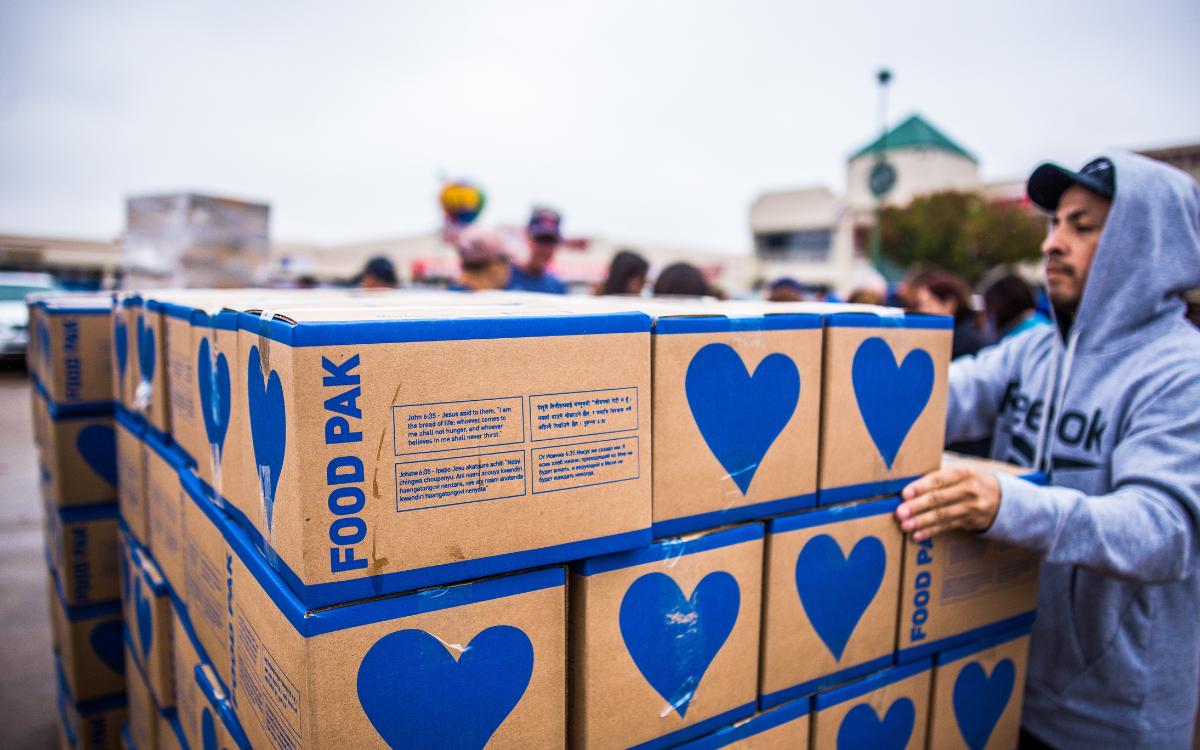
US nonprofits have eliminated 28,696 jobs since the start of 2025, a 409% jump from the same period the previous year. Federal grants, which account for nearly one-third of nonprofit revenue, are being cut or frozen. Food banks, crisis hotlines, housing organizations, and community health programs are making decisions no one should have to make.
This is not an abstract policy problem. It lands directly on the doorstep of every credit union in the country.
Because when a food bank closes, members go hungry. When a housing nonprofit folds, members lose stability. When community organizations disappear, the social fabric that credit unions depend on (and exist to strengthen) quietly unravels.
The question isn’t whether credit unions should care about this. They already do. The question is whether the tools they’re using are equal to the moment.
To put the sector’s scale in context: nonprofits account for 10% of private payrolls in the US, more than manufacturing, with over 300,000 organizations employing 12.8 million workers. The sector received $267 billion in government funds in 2021. Much of that infrastructure is now at risk. As Megan Allen, Chief Executive of the New York Council of Nonprofits put it with admirable economy: “Non-profits were already working on shoestring budgets. Now we’re working with half a shoe string.”
The standard response is to ask for more money. Reasonable. Also, increasingly, not enough.
Here’s what’s less obvious: the solution may not be bigger donations. It may be better infrastructure for generating them.
The loneliness problem is also a generosity problem
A landmark nationwide survey, the Social Connection in America report, confirms what most of us already sense: Americans are less connected than they used to be. The survey of over 10,000 US adults found that 41% feel lonely at least sometimes, and nearly three-quarters say they get together with people they care about face-to-face only twice a month or less.
More striking: more than half of all adults said they attended no clubs or organizations, did no volunteering, and got together with neighbors to help their community zero times over the last year.
As the report’s co-author Steven Crane summarized, disengagement has become the norm, with implications for the resilience of communities, not just individual wellbeing.
What gets less attention is the corollary finding: people want to reconnect. They want to contribute, to feel useful, to be part of something that matters beyond their own household.
The generosity is there. The infrastructure often isn’t.
That’s not a sentiment problem. That’s a logistics problem. And logistics problems are solvable.
Credit unions are sitting on an underused asset
Credit unions have always been generous. Sponsorships, charitable donations, foundation grants, volunteer days—the movement’s track record of community investment is genuine and long-standing.
Credit Unions for Kids is a case in point. The movement raised $2.4 million at a single wine auction this month—a remarkable demonstration of what collective commitment looks like when it's focused. The energy, clearly, is there.
The question is whether that same energy can be channelled closer to home—into the food banks, housing organizations, and community programs that members encounter in their daily lives
The distinction that matters is between funding generosity and activating it.
A credit union that writes a check to a local food bank does something good. A credit union that runs a matched giving campaign where every member dollar is doubled and every gift has visible impact does something structural. It turns a transaction into a movement. It makes the member the philanthropist, not just the institution.
That’s not a small distinction. That’s the whole game.
Credit unions have something that most financial institutions would pay dearly for: genuine trust. Members believe their credit union is on their side. That’s rare. And it makes credit unions uniquely positioned to say to their members: here is a cause worth backing, and we’ll back it alongside you.
The matching model works, if you have the tools
Meanwhile, global charitable giving reached $2.3 trillion worldwide in 2024, and total US charitable giving rose 6.3% to $592.5 billion, the first time in three years that growth outpaced inflation. But the total number of donors declined. Fewer people are giving, and those who do are giving more. The lesson: depth beats breadth. A smaller group of aligned, activated supporters can carry a mission through volatile periods far better than a broad but passive donor base.
Matching campaigns, community giving initiatives, donor participation programs: the evidence for these approaches is strong. People give more when they can see their contribution multiplied. They stay engaged longer. They come back.
The challenge, historically, has been operational. How do you run a matching campaign efficiently? How do you connect members to vetted local nonprofits? How do you make the whole thing feel effortless rather than administrative?
The solution is infrastructure: moving the credit union's role from occasional donor to permanent community giving engine, without reinventing the wheel each time.
A practical case for leadership
Nonprofits need more than goodwill right now. They need predictable, community-rooted funding streams that don’t disappear when a government budget shifts or a major donor has a bad year. Angela Williams, CEO of United Way, put it plainly: when donations taper off alongside government cuts, it “not only hurts the sector, but has a trickle-down effect that will hurt society in the long term.”
Credit unions can help build that, not by giving more necessarily, but by giving smarter. By creating structures that multiply community generosity rather than simply expressing their own.
The cooperative model was always about people helping people. Matching a member’s donation isn’t a departure from that principle. It’s the most direct expression of it.
The funding gap is real. The desire to close it is real. And the institutions best placed to do the mending have been part of their communities all along—not as donors, but as neighbors.
It's time to start stitching.
- Financial Times: US nonprofit job cuts and sector employment data.
- Social Connection in America Report: Led by Professor Julianne Holt-Lunstad; funded by the Barnes Family Foundation.
- GivingTuesday: The State of Generosity. Global charitable giving figures.
- Altrata: The Global Ripples of US Federal Funding Cuts.
- NonProfit PRO: 12 Revealing Nonprofit Stats From 2025.
- Phys.org: Nonprofits and communities lost funding in early 2025.