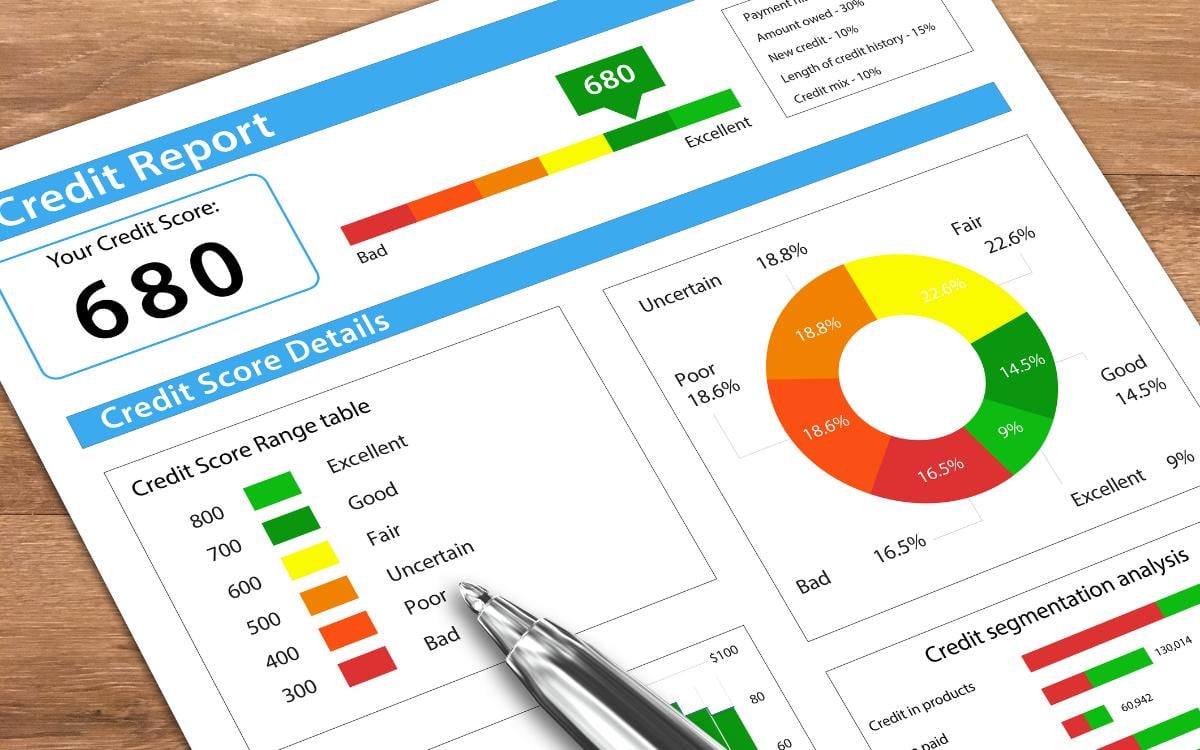
James had a 684 FICO score. Two years of auto loan payment history. No delinquencies in the prior 24 months. Your underwriter approved his $38,000 truck loan in thirteen minutes.
Fourteen months later, he is 60 days past due. He has stopped answering calls, and your recovery team is preparing for a likely loss.
What your bureau pull never showed: twelve months before application, James had a 528 score. Three credit repair firms, nine dispute letters, and two purchased tradelines later, he crossed your approval threshold. Nothing on the bureau report was technically incorrect. That is exactly the problem.
Auto loan delinquency across the credit union system is running at pre-pandemic highs, and the gap between that trend and reported portfolio performance is wider than most credit models can explain. NCUA’s Q4 2025 data shows rising delinquency across a $1.72 trillion loan book, even as system-wide net income increased more than 30%.
Some of this is genuine credit stress. But a portion reflects a different issue: file integrity. In these cases, the borrower was always subprime—the bureau file was simply altered to appear otherwise.
This is distinct from synthetic identity fraud. The borrower is real. The Social Security number is often valid. The credit history exists. But in the months leading up to application, that history has been deliberately manipulated—“washed”—to clear underwriting thresholds.
First-party credit manipulation typically operates through three overlapping channels.
Credit washing is the most common. Credit repair firms submit high volumes of dispute letters challenging negative tradelines across all three bureaus. Under the Fair Credit Reporting Act, bureaus have 30 days to verify disputed items. At scale, verification often fails within that window, and the item is removed by default. The derogatory history disappears, and the score rises—with no indication it was ever there.
Tradeline piggybacking amplifies the effect. Borrowers pay to be added as authorized users on seasoned accounts with long, clean histories. Those tradelines appear on the applicant’s report in full, despite the borrower having no repayment responsibility. The score reflects depth and stability that does not belong to the applicant.
Credit Privacy Numbers take the process further. These are nine-digit identifiers structured to resemble Social Security numbers, allowing applicants to present as new, thin-file borrowers while bypassing derogatory history tied to their actual identity.
What makes this particularly impactful in auto lending is how tightly approvals are tied to score bands. When thresholds are clearly defined, applicants know exactly what number they need to reach. A borrower who clears 660 through manipulation looks identical, on paper, to one who earned it legitimately.
The pattern doesn’t resemble fraud at all. It degrades over time, looks like typical income stress, and clears every traditional trigger for collections. By the time it’s recognized as a loss, fraud was never part of the conversation.
The signals that distinguish a manipulated file from a legitimate near-prime borrower are structural, and they exist within origination data if your process is designed to surface them.
Dispute activity clustered in the twelve months prior to application is one of the clearest indicators. So are derogatory removals that occur without corresponding new tradelines. Account opening velocity that outpaces stated income and authorized user tradelines significantly older than any primary account are additional signals that the file has been engineered.
When bureau data has been altered, the bureau score cannot reveal what has been intentionally removed. Other data sources can.
First, look for evidence of recent tradeline changes before scoring the file. Multiple derogatory items that were recently removed, or accounts showing updated statuses within a short window, can indicate prior dispute activity. When negative history disappears without a corresponding new tradeline, it should be treated as a file integrity signal—not a neutral event. In practice, surfacing these patterns requires going beyond a static bureau pull and incorporating models that evaluate how the file has changed, not just where it landed.
Second, evaluate the composition of the credit file, not just the score. Reliance on authorized user tradelines—particularly those that are significantly older, higher-limit, or cleaner than any primary account—artificially inflates credit strength. When a borrower’s profile is anchored by tradelines they do not own or control, the score will reflect borrowed history rather than true repayment capacity. Detection here depends on recognizing structural imbalances in the file, a layer where adaptive fraud models and cross-institution signals can materially improve visibility.
Third, verify income against observed cashflow and apply consistency checks across the application. Credit washing can elevate a score, but it does not change underlying financial behavior. Comparing stated income to transaction-level cashflow, along with reviewing address stability, account opening velocity, and document consistency, will often surface gaps that the bureau was never designed to detect. In a recent proof of concept, applying this type of cashflow-based verification and behavioral analysis—through Scienaptic’s Income Lens and FraudShield+—identified a significant share of risk that had cleared traditional origination controls and would have otherwise been booked as credit loss.
Auto charge-offs tied to manipulated files do not present as fraud. They appear in your provision for loan losses and are reported as credit performance issues.
But if a meaningful share of your delinquency pipeline is driven by altered bureau data—and at current credit repair volumes, that share is not trivial—then those losses were never collectible to begin with.
The dispute activity that enabled them was visible at origination.
The question is whether your process was built to recognize it.
Ready to uncover hidden fraud in your portfolio? Scienaptic's FraudShield+ uses consortium-signal intelligence to detect synthetic identity fraud before it becomes a charge-off. Let us assess your auto loan originations and delinquency patterns—we'll identify the fraud hiding in your losses and help you build controls to catch it at the point of entry.