I visited my first Buc-ee’s on an unseasonably warm Christmas Eve in Calhoun, Georgia, a small town an hour northwest of Atlanta. I hadn’t heard of Buc-ee’s until summer of 2025, when the Texas-based gas station chain’s first Virginia location opened, and my fellow Virginians were ecstatic. Describing Buc-ee’s as “magical” and a “must visit,” people across the country have developed an unwavering affinity to the bigger-is-better chain.
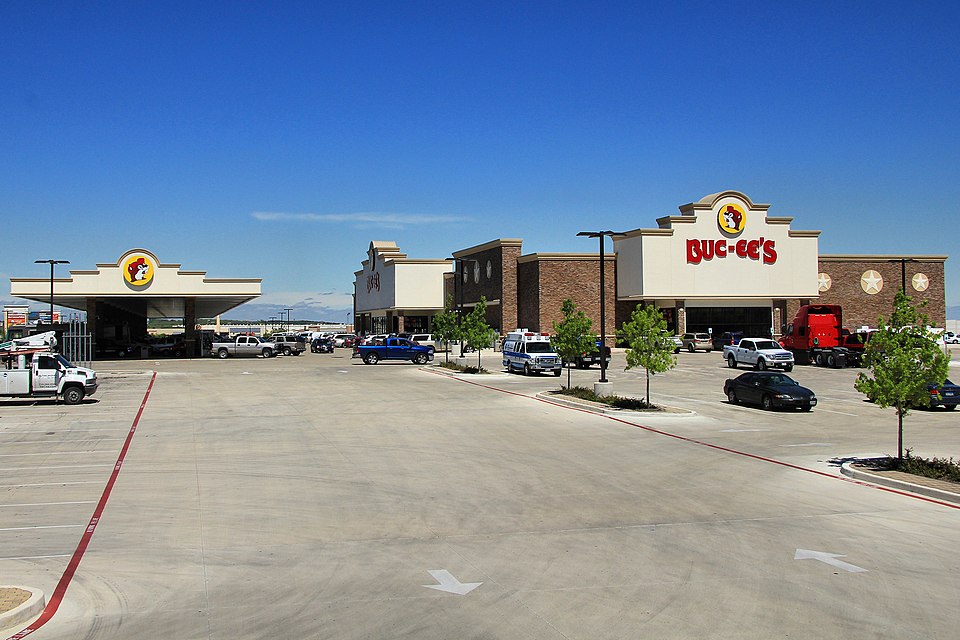
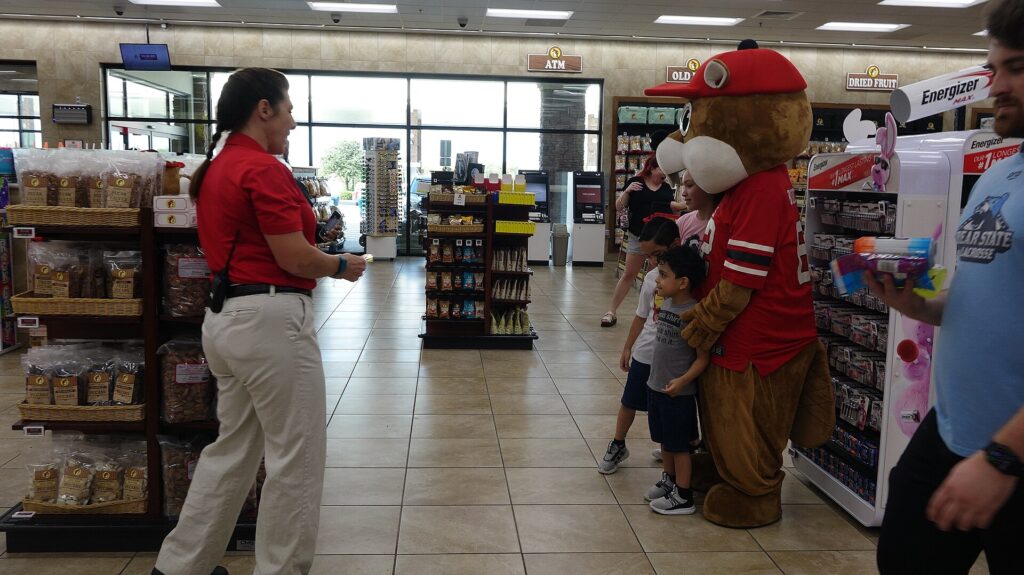
Driving further and further south, it became obvious to me that Buc-ee’s success was no accident; their billboards popped up every few miles for hours, enticing me with mysterious and witty marketing.
What can we learn from Buc-ee’s ability to take something so mundane as gas station/travel center chain create such a passionate following? What marketing strategies could we apply to credit union marketing to foster a brand movement so powerful?
Develop an unwavering commitment to specific promises
Turns out, Buc-ee’s uses the same tried-and-true foundational marketing principles that we can use for our own credit unions. There’s no secret sauce, just powerful psychological methods that create a recipe for success across all industries.
Buc-ee’s leans into their core promises more than any other company I can think of. They don’t promise a life-changing experience or the best tasting food in America, but they do promise the cleanest bathrooms you can find while traveling. “Buc-ee’s has remained committed to providing award-winning clean restrooms, freshly prepared food, cheap gas, and outstanding customer service,” says Buc-ee’s spokesman and general counsel Jeff Nadalo, in an article from CNN.
Any Google or AI prompt will reveal the public’s obsession with Buc-ee’s insanely clean bathrooms. Buc-ee’s isn’t promising to save lives here, but they are promising one essential feature that can make a big difference in someone’s travel experience. How can we apply this essential-promise methodology to our own credit unions?
- Don’t over-promise: Credit unions have a tendency to make big promises in their marketing messaging and brand values. Rather than, “Helping you achieve financial freedom!” or “Striving to uplift our communities!,” why not consider, “The nicest person you’ll meet all day.” This promise seems much more attainable and approachable.
- Reinforce at every touchpoint: Once you’ve decided on your attainable promise, plaster it everywhere. Make it obvious, just like Buc-ee’s has done. Make it a point of pride among employees.
Brand yourself as a destination
Remember when Capital One launched their “Capital One cafes” and were the butt of jokes for quite some time? I too chuckled at the idea at the time. But over 10 years later, they have 50+ cafes across the US and the effort is widely considered to be a successful awareness and retention strategy. Here are two things I didn’t know about Capital One Cafes: (1) they’ve partnered with a high-end, specialty coffee company to operate in these cafes, and (2) customers get 50% off their order if they use their Capital One card. Here’s what we know about most adults, especially Millennials and Gen Zers: they like really good coffee and discounts.
Buc-ee’s uses a very similar strategy. The chain is essentially branded as a travel destination while traveling to a destination: a massive travel shop, restaurant, souvenir store, and gas station in one. The brisket! The beaver nuggets! The cheap gas! Concentrated in Texas and spread across the southeast, Buc-ee’s has 58 locations nationwide. Their footprint is microscopic compared to other American gas station chains like 7-Eleven with 13,000 locations. But what they lack in number of locations, they make up for in sheer size of each one.
Buc-ee’s holds two world records: Their Luling, TX store is the largest convenience store in the world at 75,593 square feet, and their Katy, TX store boasts the world’s longest car wash at 255 feet of conveyor.
Creating a destination-worthy environment for your credit union doesn’t have to be complicated. Consider the simple things that people enjoy: food, music, smells, art, humor. How can you incorporate even small changes to make your lobby or drive though a destination?
- High-end snacks and drinks (Taos bars and Izzie sodas)
- Low-end snacks and drinks (people love free popcorn)
- Dedicated meeting spaces for folks with good facilities and internet
Create a unique company voice
Buc-ee’s is a strong example of the importance of having a unique brand personality and voice. They have developed a masterful brand personality and integrated it across its main marketing vehicle: billboards. And the billboards are downright dominating. They seem to exist every few miles as you get closer and closer to a Buc-ee’s location. They all have a ubiquitous black background and giant ecstatic beaver head logo, with just a few words of text. They are delightfully abstract and lean into the IYKYK, tribalist strategy; you feel special if you get the message.
Some of them are a call to action to exit now. Some of them are slang phrases that reinforce what they are known for. Some of them seem to make no sense at all. They work though.
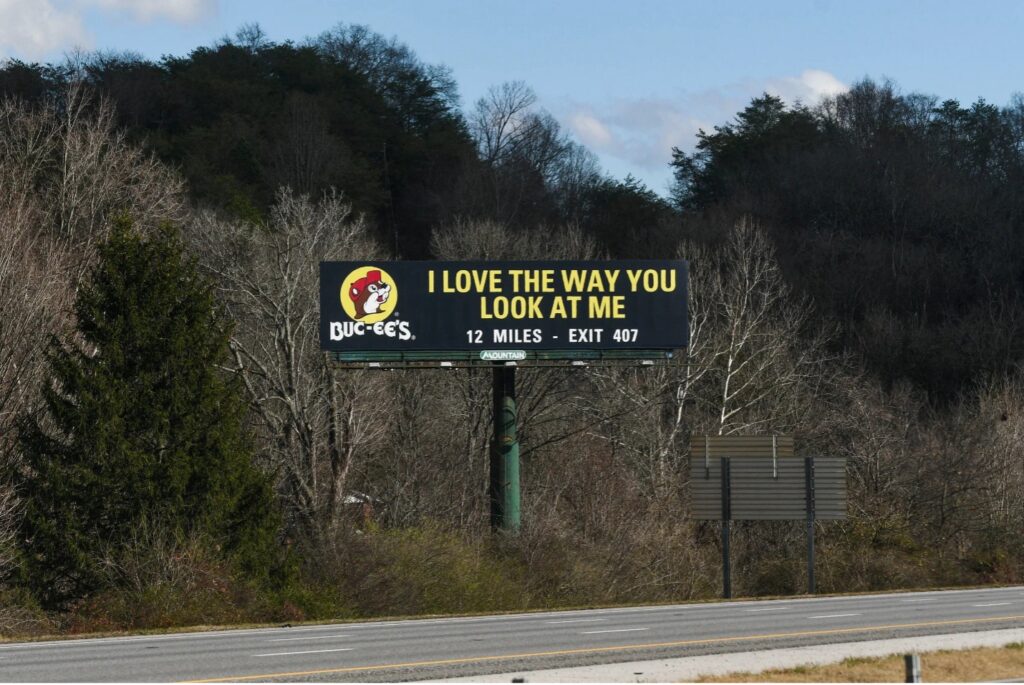
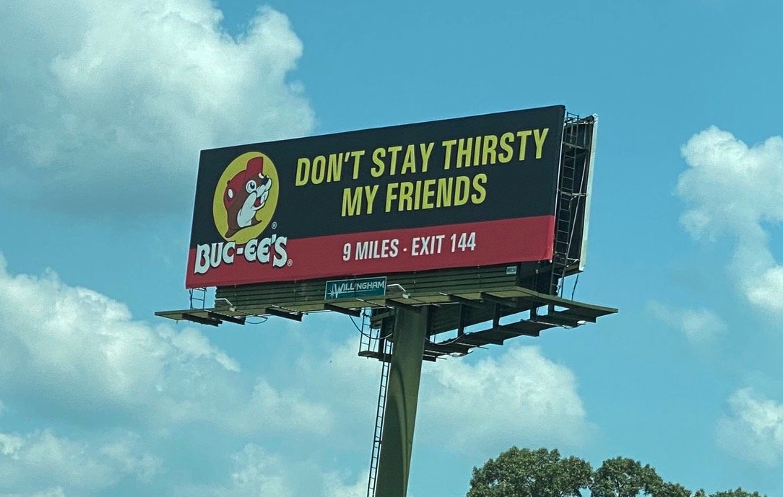
Their brand messaging walks a fine line between irreverent and cheesy, and it is a textbook example of an effective brand voice strategy. Here’s why:
- It’s memorable: Unexpected phrases that take a moment to decipher. In a sea of sameness among financial institutions, even something small can stand out.
- It’s simple: Easy to read when going 75 mph, no long sentences, no disruptive background images. This same methodology works for your own billboard and ad placement around town.
- It’s situational: Short, punchy, and often quite funny phrases break the monotony of road trips. The same could be said for the monotony of being stuck in traffic or running errands.
All these billboards incorporate the same brand voice that makes them obviously Buc-ee’s, even if the logo wasn’t present. Buc-ee’s billboard campaigns represent the litmus test of branding: can marketing collateral, like a billboard, website, or social media post be recognized if the logo was removed? I ask this question to my credit union clients often: if the logo was removed from your website or marketing collateral, could members recognize you?
Conclusion
Buc-ee’s brand strategy has made them a leader among travel pit-stops. By leveraging foundational strategies such as brand promises, destination marketing, and brand voice, they have both positioned themselves as not just the best place to stop while traveling, but also created a sense of community and fostered tribalist mentality for those who do stop. We can certainly learn a thing or two about their success, and I hope this article was helpful to you.