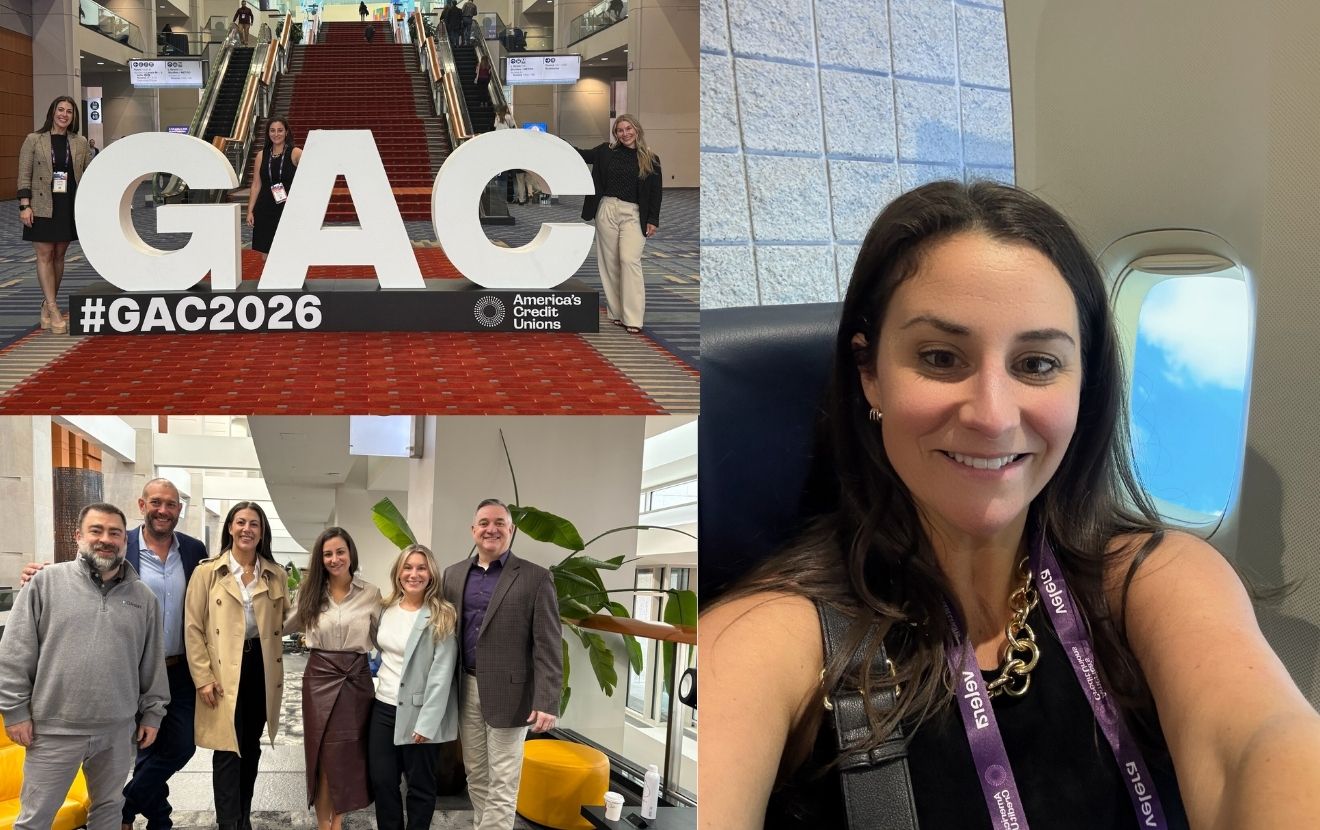
I have worked in the credit union space on and off throughout my career. I started in the role that provides the most institutional knowledge, in my opinion: a teller. From there, I worked as a marketing assistant, a marketing research analyst, oversaw community outreach and events and PR, and later served as an AVP of Marketing.
Today I work at CUInsight, where I get to appreciate the credit union movement from a different perspective. Not quite the outside looking in, but as a resource that wholeheartedly supports and understands the inner workings of the credit union model.
Our role at CUInsight is to amplify the voices of credit unions and their partners. Our mission is to educate and inspire the people working in the credit union community through content creation and curation, and to provide a platform for industry thought leaders to share their perspectives. It is truly a privilege to help create space for both established and emerging leaders to share ideas, news, and insights about how we can all move forward together.
Though I have been in the credit union space for some time, this year was my first time attending America’s Credit Unions’ Governmental Affairs Conference (GAC). I wanted to share my experience as a first-timer who has worked both inside the walls of a credit union (shout-out to St. Mary’s Bank and Lighthouse Credit Union) and now with an organization that supports credit unions and their partners.
On Sunday, I walked in eager to learn and walked out with a blister. Pro tip: there is a lot of walking, so choose your shoes wisely and learn from my mistakes if you plan to attend for the first time.
All jokes aside, I also walked out with a clear understanding of the theme that would carry throughout the week: storytelling.
Kindra Hall, Wall Street Journal bestselling author and keynote speaker, opened the conference with “The Irresistible Power of Strategic Storytelling.” Her message centered on how we tell our stories and how to tell them with impact. That message stayed with me throughout the week.
Because when it comes down to it, credit unions are built on stories.
Stories about a member who needed a chance when no one else would give them one. Stories about a family who finally felt comfortable walking into a financial institution. Stories about people who felt seen, heard, and supported.
Those stories are not just anecdotes. They are the reason credit unions exist.
After the keynote, we entered the exhibit hall, which was thoughtfully filled with partners who are all there for one reason: helping credit unions advance their mission and better support their members.
For credit union professionals, it is a valuable opportunity to meet organizations that could support strategic goals and future initiatives. It’s an environment where you can meet the people behind the companies, hear their “why,” and see if they might be the right partner.
For prospective partners wondering if GAC is worth attending, the answer becomes clear very quickly. Being in the room with more than 6,200 credit union professionals is an incredible opportunity. The exhibit hall was packed with teams having real conversations. People were not just collecting tchotchkes. They were learning, sharing challenges, and exploring partnerships that could help move the industry forward.
And once again, the theme of storytelling showed up. Partners shared why their companies exist and why they care about serving credit unions. Credit union professionals shared how these partners have helped them advance their missions and better serve members.
Monday brought another unforgettable moment: hearing Brené Brown deliver her keynote on Daring Leadership.
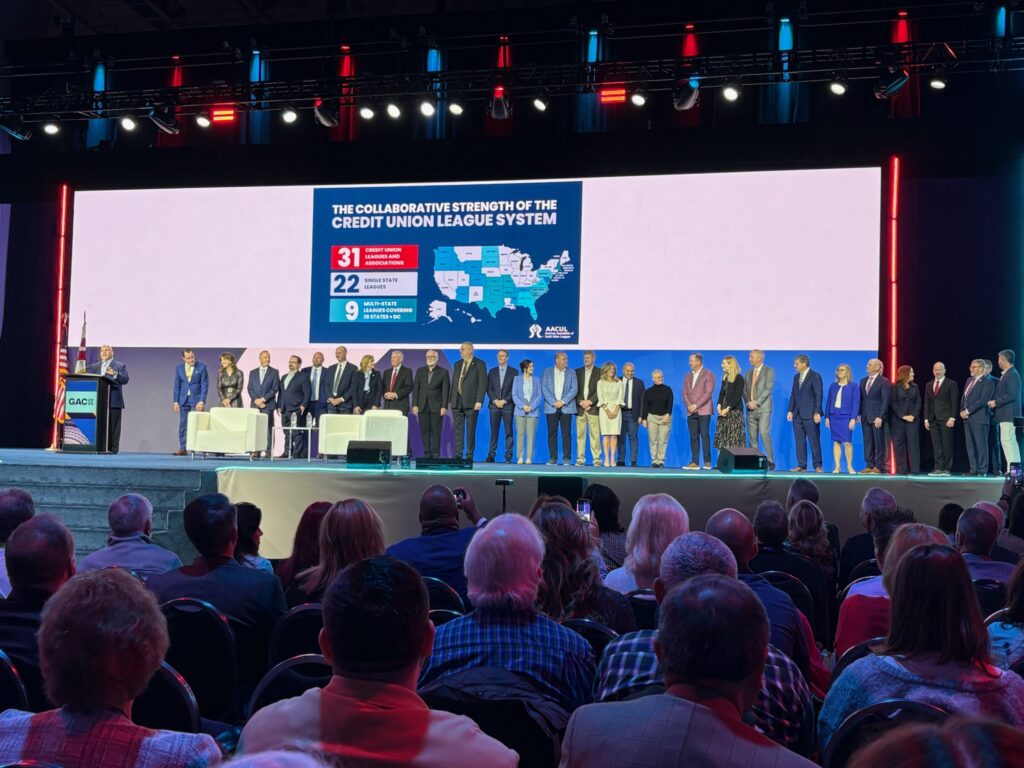
The annual meeting and advocacy updates reminded everyone why we gather each year. Credit unions collectively deliver more than $41 billion in benefits annually and serve more than 145 million members.
As Scott Simpson, President and CEO of America’s Credit Unions, shared, “It is the significance of what calls us here.”
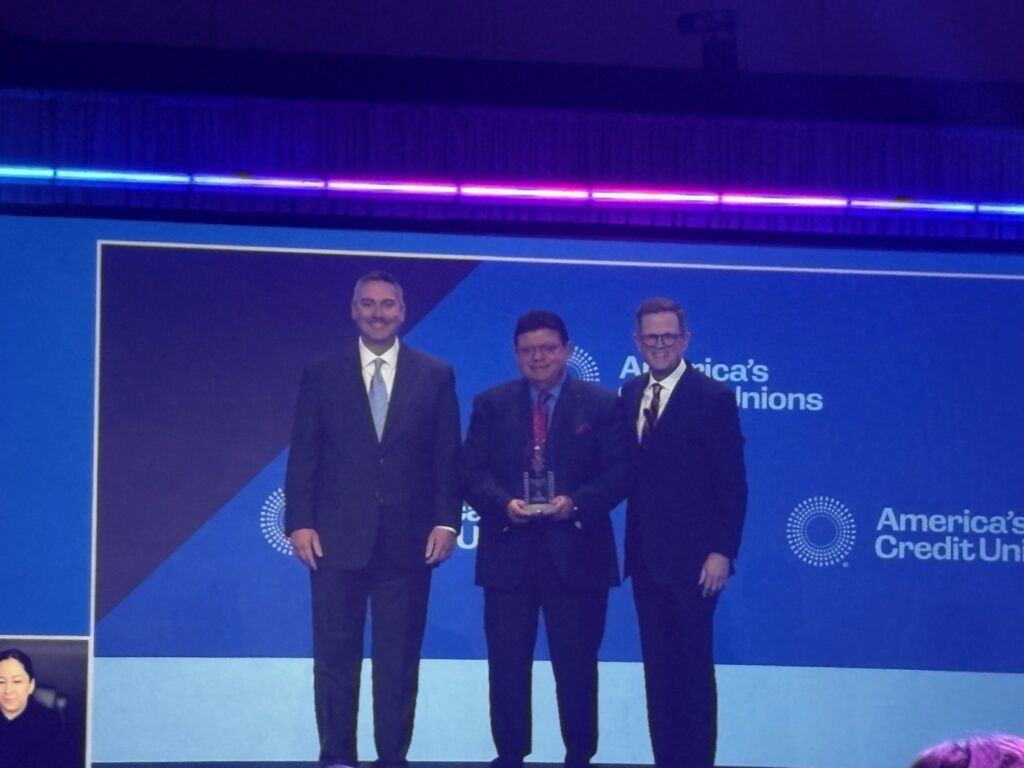
We also heard from advocacy leaders across the industry. Greg Mesack noted that our strength comes from the stories of cooperative finance creating a better model for everyday Americans. The credit union movement has relationships with all 535 members of Congress, and policymakers regularly reach out to credit union leagues for perspective.
That matters.
Another powerful reminder of the movement’s impact was learning that our industry has contributed more than $225 million over the past 40 years to Credit Unions for Kids. Considering that the number one cause of financial hardship in the United States are medical expenses, these efforts are helping fund care, support families, and bring the credit union mission to life.
I also had the honor of attending the National Credit Union Foundation’s Herb Wegner Memorial Gala, where we celebrated incredible leaders, including Steven Stapp, Kathy Chartier, and Gigi Hyland. Their stories reminded us that the credit union movement has always been about listening to people who are often overlooked and underserved, and working to improve lives through financial well-being and education.
We also heard from Adam Grant, a renowned organizational psychologist and bestselling author, whose keynote on Hidden Potential reinforced that great performance is not just about natural talent. It comes from disciplined growth over time. Organizations that invest in learning, mentorship, deliberate practice, and character development unlock far more potential in their teams.

But beyond the keynotes, sessions, and exhibit hall, the real magic of GAC happens in the conversations.
It happens when you finally meet someone in person that you have only seen in a small LinkedIn photo or on a Zoom call. It happens when credit union professionals share their lived experiences serving members and supporting communities. It happens when connections are formed that will lead to new ideas, partnerships, and progress.
While I did not personally participate in Hike the Hill, the advocacy initiative where credit union leaders meet directly with policymakers, its impact was evident throughout the conference. Educating lawmakers about the cooperative, member-owned structure of credit unions and protecting the interests of members is critical work.
And once again, it comes back to storytelling.
Telling our collective stories about how credit unions serve members is part of all of our callings.
When I packed my suitcase to leave GAC 2026, I felt immense pride to be part of this movement.
A movement that is shaping the future together.
So, is attending the Governmental Affairs Conference worth it?
If you care about advancing the credit union movement, strengthening advocacy efforts, building meaningful partnerships, and continuing to tell the stories of the members we serve, then yes.
It absolutely is.