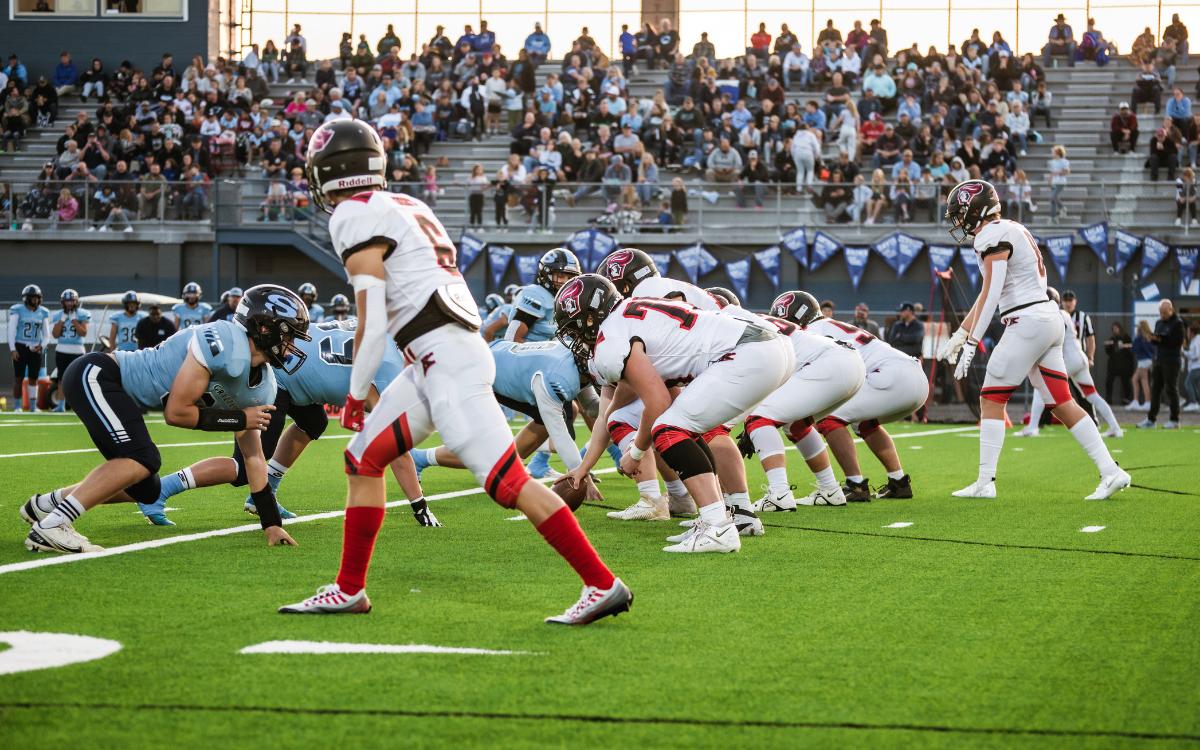
There was a time when college football felt fairer and more competitive. Powerhouses existed, sure, but development mattered. Coaching mattered. Loyalty mattered. On any given Saturday, a smaller school could rise, surprise, and belong. That sense of possibility is largely gone, and it didn’t disappear by accident.
The same forces hollowing out college football are hollowing out our economy, our institutions, and our communities.
Name, Image, and Likeness (NIL), introduced under the loose oversight of the NCAA, didn’t just allow athletes to earn money. It unleashed a market with no guardrails. The richest programs, which were already advantaged, became almost untouchable. Wealth consolidated at the top. Everyone else slid into a permanent second tier.
Sound familiar?
We’re living through a broader shift where income and opportunity are no longer merely unequal. They are being aggressively concentrated. A tiny fraction of individuals and institutions now control staggering wealth, while a massive portion of the population struggles with stagnant wages, rising costs, and shrinking access. Two tiers. One super small and ultra wealthy. One super large and barely hanging on.
College football didn’t cause this problem. It simply reflects it.
Today’s version of the sport mirrors a world where paying the highest dollar guarantees access to the best talent. Not because you earned it. Not because you developed it. But because you can afford it. That might be efficient, but it’s not competitive, and it’s certainly not enjoyable.
More even playing fields are more compelling. They create real competition. They produce stories people care about. When money alone determines outcomes, the game becomes predictable and sterile.
What’s most disturbing is how quickly people have accepted the outcome. You now hear voices saying, “Those smaller (or poorer) schools or conferences never belonged in the playoffs anyway.” That mindset doesn’t just excuse inequality, it enforces it. These programs were pushed into second-class conferences by design, stripped of resources, and then mocked for failing to compete in a system rigged against them.
They are locked out and then blamed for being locked out.
This isn’t just elite programs versus middle-of-the-road programs in sports. It’s oligarch versus everyone else in real life.
You see it in banking. Big financial institutions versus small institutions. Mega-banks optimized for profit and shareholder return versus credit unions and community institutions built around people. The largest players may pressure regulators and markets to force smaller institutions to merge or fold. Less competition. Fewer choices. More control.
The logic is always the same: bigger is more “efficient.” But efficient for whom?
Just as college football is losing its soul, industries across America are being reshaped into winner-take-all systems. A handful of dominant players extract value while everyone else is told to accept their place or just go away. The middle erodes. The bottom struggles. The top hardens into permanence.
I’m not fond of a world that looks like this.
Not because success is bad but because rigged success is corrosive. Because systems that reward wealth over contribution eventually stop serving people at all. They stop innovating. They stop caring. They stop listening.
We need both big and small. We need elite programs and underdogs. Large institutions and small ones. Scale and intimacy. Power and proximity. When everything consolidates upward, resilience disappears. Choice disappears. Humanity disappears.
A healthy system is one where everyone has a legitimate chance at survival and success. Not a guaranteed outcome but at least a fair shot. That requires boundaries. It requires rules. It requires an understanding that money is a tool not a moral justification.
What we’re doing now across sports, finance, housing, healthcare, and education is quietly teaching people that the game is over before it starts. That if you weren’t born into the right tier, you don’t belong on the field.
That is how societies fracture.
College football used to remind us that development, commitment, and belief could matter. Credit unions still remind us that finance can be human-centered. These models aren’t outdated. They are essential.
The moral is simple and uncomfortable: unchecked wealth is destroying industries and lives. We are building a two-tier world and pretending it’s progress.
It’s not.
If we want competition, creativity, and community to survive, we need to wake up. We need to demand more equitable systems. And we need to start taking back our shared success before the field is empty except for those who bought their way in.