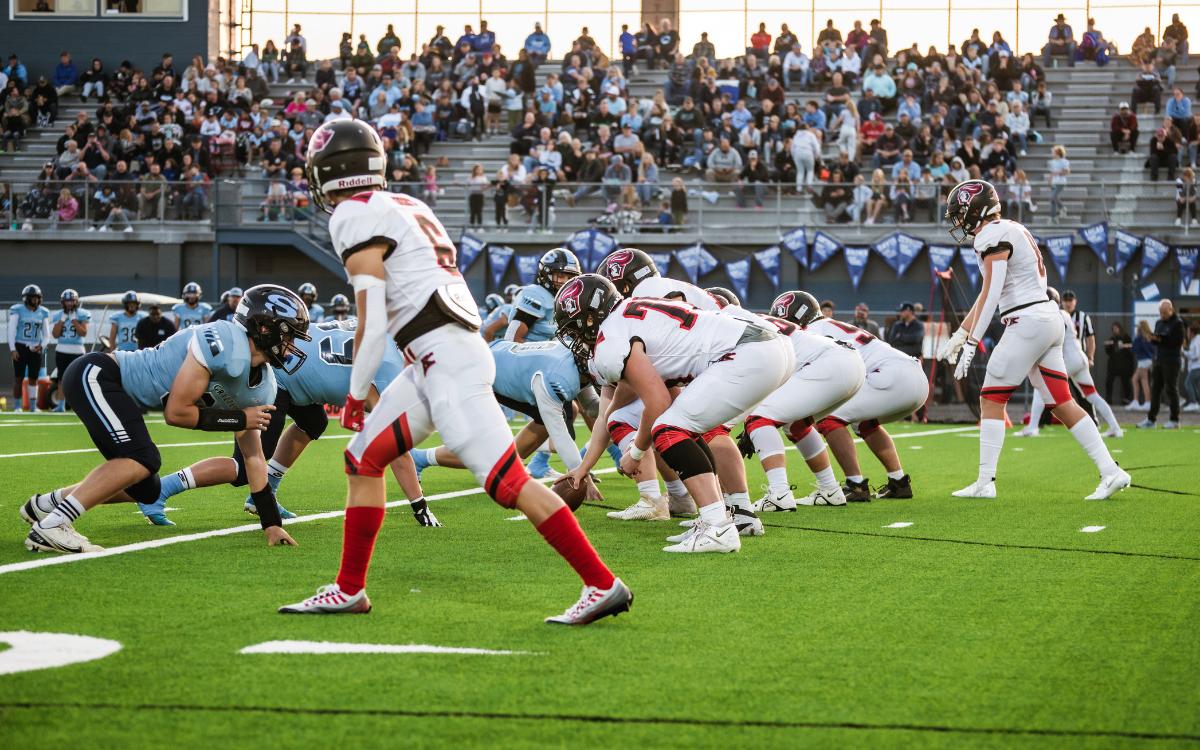
I grew up playing a lot of sports. In high school, volleyball was one of my things. My teammates and I signed up for volleyball camp one summer back before year-round club sports and travel teams were a thing. If there was any chance to get better, we took it.
I was pretty good. Wicked serve. Decent hitter. Fantastic blocker. Scrappy as hell at digs. I thought I was something.
Then camp humbled me.
The camp coach (well-intentioned, I'm sure) nicknamed me "lazy legs." That was over 40 years ago. I still hear it.
I started CrossFit at age 56. I’m a year and a half in on my journey and have been loving every minute of it. But sometimes during a class when my legs are burning and I can't breathe and I'm white knuckling my way through some brutal workout, her voice shows up right on cue. C'mon, lazy legs. You can do better.
Two words. Four decades. Still living rent-free in my head.
I've had other indelible marks, of course ... more positive ones than negative. We all have. A teacher who saw something in us we didn't see yet. A coach who pulled us aside and said exactly the right thing at exactly the right moment. A stranger who smiled when we needed it most. These moments embed themselves in us without our permission, and we carry them long after the people who made them have forgotten we exist.
That's the thing about indelible marks. The person who makes them usually has no idea.
Which means every single day, you are leaving marks on people, and you probably don't know it either. The way you respond to a frustrated member. The tone you use in a staff meeting when someone asks a question that feels obvious. The “thank you” you give … or don't give. The moment you slow down to actually see someone instead of just processing them.
You are writing on people whether you mean to or not.
Maya Angelou knew this better than most. She didn't just write words, she understood that words, tone, and presence leave a residue on people that outlasts the moment itself. Her truth was simple and devastating: people won't remember exactly what you said or precisely what you did, but they will always remember how you made them feel. That feeling becomes the mark. That feeling is what they carry.
"Lazy legs" wasn't really about my legs. It was about how I felt in that moment … small, dismissed, not enough. That's what stuck. Not the words. The feeling behind them.
So, when you're the one holding the pen (and in this business, we are always holding the pen) choose your words wisely and carefully. Because sometimes known and sometimes completely unknown to us, we have the power to leave a mark that follows someone for the rest of their life.
That's a heavy thing to sit with. But it's also a profound opportunity.
Credit unions were built on this. The whole model, people helping all people, only works if we actually mean it. Not just as a tagline on a lobby wall, but as the lived experience of every person who walks through our doors, calls us, messages us, or sits across a desk from one of our staff. We have the chance, every single day, to leave people feeling seen, respected, valued, and cared for in a way they won't forget.
That's the credit union difference. Not the rate. Not the fee structure. The mark.
So, I'll ask you: what's your indelible credit union mark? What's the story your members carry with them when they leave? What are you saying to your employees today that they'll still be hearing years from now, and will it build them up or tear them down?
Think about the lazy legs in your world. Then decide what kind of coach you want to be.