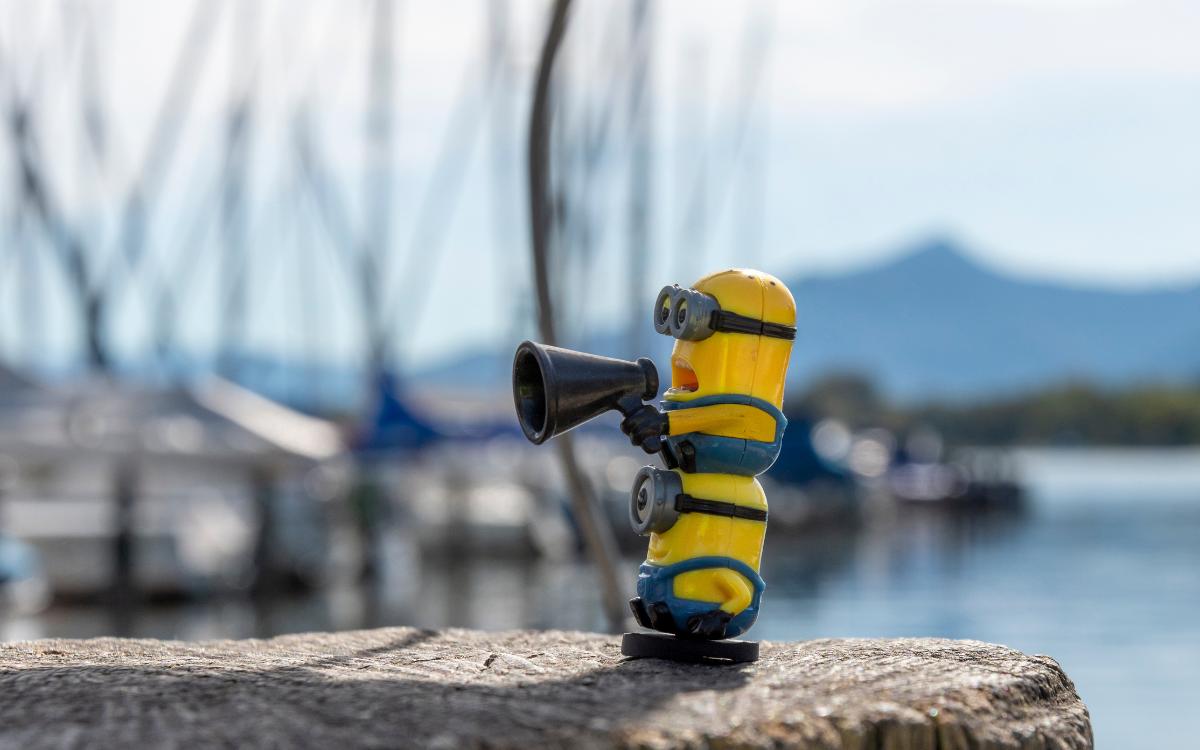
Imagine walking into a credit union run entirely by Minions.
Kevin is in charge, trying to explain the mission. Stuart is surrounded by flashing dashboards and buttons, enthusiastically pressing anything that lights up. And Bob is at the front desk greeting members … occasionally distracted by a banana.
The credit union is incredibly busy. Loans are being approved. Fraud alerts are flying. Buttons are being pushed.
But before long Kevin is waving his arms trying to restore order because Stuart just froze half the debit cards after noticing a blinking fraud alert, and Bob approved a loan simply because the member “seemed nice.”
Funny? Absolutely.
But surprisingly … this isn’t that far off from the conversation happening in financial services right now.
Because the future of credit unions isn’t Human Intelligence (HI) versus Artificial Intelligence (AI).
It’s HI + AI.
At FI SAFE, an initiative supported by the nonprofit Purple Bridges to provide financial empowerment for domestic violence and human trafficking survivors suffering from financial abuse, we often describe this intersection with a simple concept:
Tempathy℠.
Technology + Empathy = Tempathy℠.
It’s the idea that financial institutions, especially credit unions, must invest not only in smarter technology, but also in the human intelligence required to use that technology responsibly, ethically, and compassionately.
Credit unions were built on human intelligence
Long before dashboards, predictive analytics, or artificial intelligence existed, a man once walked into a small financial cooperative asking for a loan.
He had no collateral. No credit history. No formal documentation, just determination and a business idea.
If modern data models had evaluated the request, the answer likely would have been immediate: declined.
But the people sitting around the table knew the borrower. They knew his character, his work ethic, and his reputation in the community.
So, they approved the loan. The borrower succeeded. His business grew. And the community benefited.
The story feels like something that could happen at a credit union today.
But it traces back to the early days of cooperative finance in the 1800s.
Long before artificial intelligence existed, credit unions relied on something incredibly powerful:
Human intelligence.
Why human intelligence still matters
Credit unions weren’t built on transactions. They were built on trust.
Human intelligence brings qualities that no algorithm can replicate:
- Empathy
- Ethical judgment
- Context
- Community understanding
- Relationship-building
When a member walks into a credit union facing financial hardship, they aren’t simply bringing numbers. They’re bringing a life story.
Human intelligence allows credit union teams to listen, understand nuance, and make decisions that align with the cooperative mission.
Without HI, the credit union movement would lose its soul.
Even Kevin understands that someone must keep the mission in mind.
Why artificial intelligence matters more than ever
But today’s financial landscape is far more complex than it was even a decade ago.
Fraud schemes evolve constantly. Transaction volumes are enormous. Members expect seamless digital experiences.
No team—no matter how talented—can manually process the scale of information flowing through modern financial systems.
Artificial intelligence excels at:
- Detecting fraud patterns instantly
- Analyzing millions of transactions
- Personalizing member experiences
- Automating operational tasks
- Identifying financial risk trends
In other words, AI is incredibly good at doing what Stuart does best: Getting a lot of work done very quickly.
But as Kevin often discovers, speed without direction can sometimes lead to unintended consequences.
The moment credit unions realize the real opportunity
Here’s where the real insight happens.
The debate about AI in financial services is often framed the wrong way. Some people worry that artificial intelligence will replace people. Others worry that relying too heavily on human decision-making will slow institutions down.
But credit unions have always been uniquely positioned to do something different. They don’t have to choose. They can combine the strengths of both.
Artificial intelligence can process enormous volumes of data and identify patterns no human could ever see.
Human intelligence can interpret those insights, apply judgment, and ensure decisions align with the cooperative mission.
This is exactly the philosophy behind Tempathy℠. Technology processes the information. People understand the impact.
And when the two work together, financial institutions can protect members, strengthen trust, and make smarter decisions.
A credit union powered only by HI
Imagine a credit union powered entirely by human intelligence. Every loan is reviewed manually. Fraud detection depends on experience. Operational tasks are handled entirely by employees.
It would feel incredibly personal. But it would also mean:
- Slower service
- Operational strain
- Limited ability to analyze large datasets
- Greater vulnerability to sophisticated fraud
The heart would be strong, but the system would struggle to scale.
A credit union powered only by AI
Now imagine the opposite.
Loan approvals are automated. Member questions are managed by chatbots. Fraud alerts trigger algorithmic responses.
Efficient? Absolutely.
But members facing difficult financial situations might receive automated denials instead of guidance.
Nuance disappears. The cooperative spirit fades.
Or put another way: A room full of Stuarts pressing buttons very quickly ... but no Kevin reminding everyone what the mission is.
The sweet spot: Tempathy℠
The real opportunity lies where human intelligence and artificial intelligence intersect.
Tempathy℠.
Technology provides scale, speed, and insight. Empathy provides context, judgment, and purpose.
Together, they create something far more powerful.
AI might detect suspicious activity on a member’s account within seconds. A credit union employee can then reach out personally to protect the member.
AI might identify financial stress patterns early. A financial counselor can step in with guidance and support.
AI oversees the heavy lifting. Humans guide the mission.
Kevin sets the direction. Stuart runs the systems. Bob connects with the members.
The lesson for credit unions
The credit unions that thrive in the coming decade will recognize that success requires two simultaneous investments: Technology infrastructure and human development.
Technology ensures credit unions can operate intelligently in a digital world. People ensure the cooperative mission remains strong.
When both are prioritized, credit unions don’t become less human, they become more capable of serving people at scale.
Tempathy℠ becomes the operating model.
The lesson for our personal lives
This intersection isn’t limited to financial institutions.
It’s happening in our everyday lives.
Artificial intelligence is helping us write, research, automate tasks, and process information faster than ever before.
But technology still depends on human judgment, creativity, and leadership.
Machines may help us move faster, but people still determine where we’re going.
The future of the movement
Credit unions have always stood at the intersection of finance and humanity.
From the very beginning, the movement wasn’t built on algorithms, technology platforms, or balance sheets. It was built on people who believed financial services could, and should, serve communities.
Now the movement stands at another intersection.
Human Intelligence.
Artificial Intelligence.
Lean too far toward technology alone and credit unions risk becoming efficient but impersonal. Lean too far toward human effort alone and they risk falling behind in a world moving at digital speed.
But when the two come together—when technology enhances empathy rather than replacing it—something powerful happens.
That’s Tempathy℠.
AI can scan millions of transactions in seconds to detect fraud.
But it still takes a human being to call the member and say, “We noticed something unusual—are you okay?”
AI can analyze financial patterns and identify when someone might be struggling.
But it still takes a person to sit down with that member and say, “Let’s figure this out together.”
Technology can give credit unions superpowers. But empathy gives those powers purpose.
And maybe that brings us back to our three unlikely credit union employees.
- Stuart would keep the systems running at lightning speed.
- Bob would remind everyone that members are people, not just accounts.
- And Kevin would stand in the middle of it all, making sure the mission stayed on track.
Because in the end, the future of credit unions probably shouldn’t be run entirely by Minions…
…but there’s something we can learn from them.
Work hard. Move fast. Embrace the tools in front of you.
Just never forget why you’re doing the work in the first place.
And if credit unions can remember that—if they can balance technology with empathy—then the movement won’t just keep up with the future.
It will help lead it.
Bananas optional.
Author insight: Advancing financial safety through Tempathy℠
FI SAFE is an initiative supported by the nonprofit Purple Bridges, focused on helping financial institutions better support survivors of domestic violence and human trafficking with escape from financial abuse.
Survivors often face complex financial challenges—coerced debt, stolen identities, restricted access to accounts, and financial control by abusers. Addressing these issues requires more than policies or technology alone.
It requires Tempathy℠.
Technology can help identify suspicious patterns, prevent fraud, and protect accounts. But empathy—combined with trained financial professionals—helps survivors regain stability, independence, and safety.
By bringing together financial institutions, advocates, and technology leaders, FI SAFE works to ensure that financial systems become not just smarter, but safer for the people who need protection the most.
Because at the end of the day, the goal isn’t simply better technology, it’s financial safety for all.